
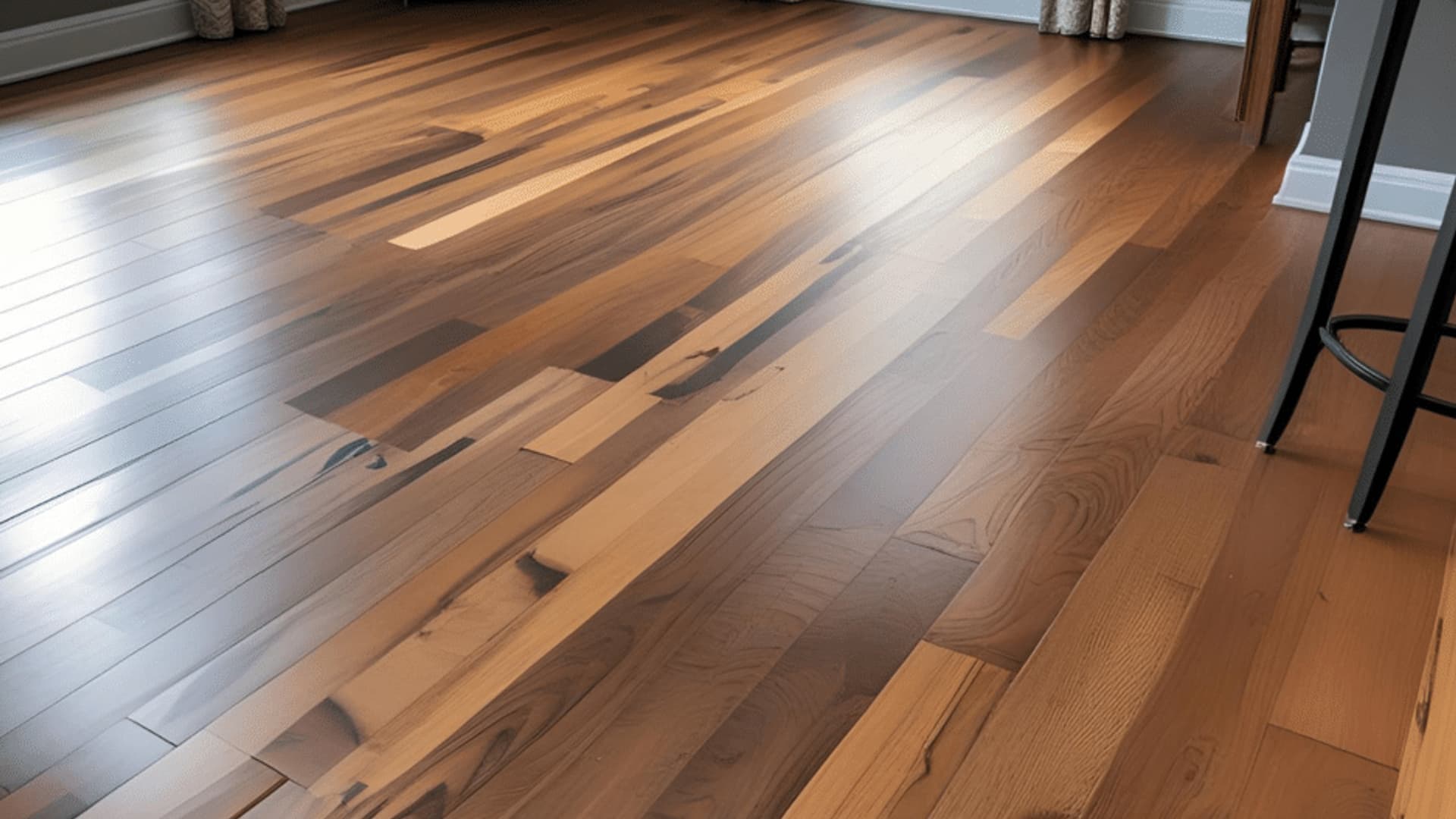
Bringing the Shine Back to Dull Hardwood Floors
Dull wood is either covered in something or worn down to something. Those need opposite solutions, and most floors turn out to be the first one.
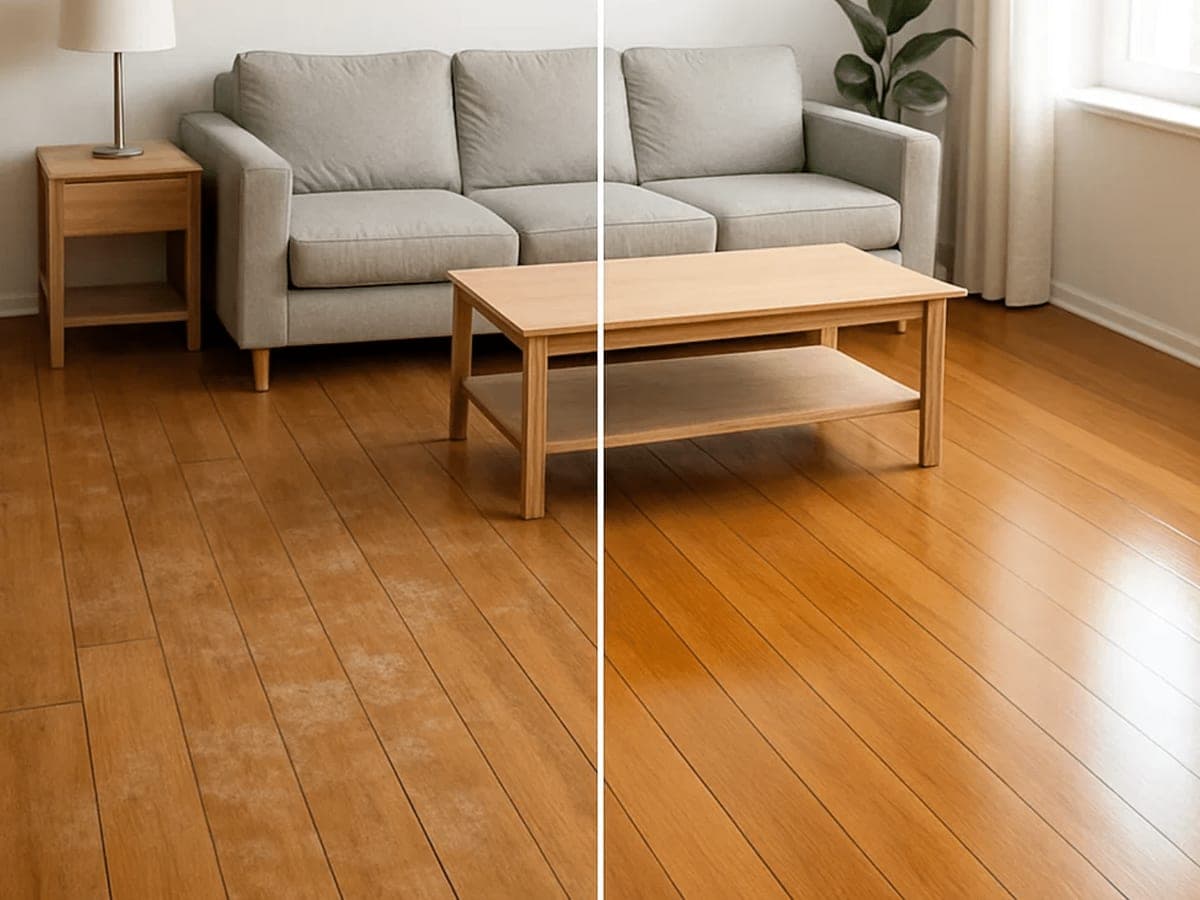
Dullness is the single most common complaint about hardwood, and it has two completely different causes that happen to look similar from standing height. One of them is fixable in an afternoon. The other one needs a floor guy with a drum sander. Telling them apart before you spend money is the whole game.
Why polish makes a dull floor duller
The instinct is to put shine back on, and there's an aisle of products built around that instinct. They work for about three weeks. What they're doing is filling in the roughness on your floor with a soft polymer that levels the surface enough to reflect light again. It looks great the first evening. Then it collects grit, scuffs faster than a real finish does, and dries down into exactly the cloudy layer you were trying to escape.
Buffing a dull floor with a household polisher is the other common move, and on a floor that's dull from residue it just heats and smears the residue around. You get a shinier smear. The underlying roughness is still there, and now it's got a burnished top that's harder to dissolve later. Neither approach asks the question that matters, which is whether the roughness is sitting on the finish or is the finish. Products that add gloss treat both cases identically, and that's why they satisfy one homeowner and infuriate the next.
Put a few drops of water on the dullest spot. If it beads, cleaning fixes this. If it soaks in, you need a refinisher, and we'll tell you so.
Two kinds of dull, and how to tell them apart
Sheen is specular reflection. Light hits a flat surface, leaves at a matching angle, and your eye sees a clean highlight. Anything that makes that surface uneven at a small enough scale sends the light off in scattered directions and the highlight dissolves into a flat, chalky look. So a dull floor is a rough floor, and the only real question is what's doing the roughening.
In the first case, the roughness sits on top. Layers of dried cleaner, soap residue, and airborne kitchen oil form a textured skin over an intact finish. Scrape a fingernail across a dull patch at an angle. If you leave a visible clean line, there's a layer up there and your finish is fine underneath it.
In the second case, the roughness is the finish itself. Years of foot grit acting like fine sandpaper have abraded the top of the coating, and in the worst spots worn through it entirely. Test with a few drops of water in the dullest area. If the water beads and sits, the finish is intact and you have a residue problem. If it soaks in and darkens the wood within a couple of minutes, the finish is gone in that spot and no amount of cleaning will bring it back.
What we do once we know which one you have
If the water beads, we clean. The moisture-controlled process dissolves the residue layer and pulls it off the floor instead of pushing it around, and the sheen that comes back is the sheen the original finish always had. Homeowners frequently describe this as the floor looking new, which is a fair description of what happens when you remove a fogged layer that had been there for years.
Then we apply a water-based protective coat. Its job is twofold. It evens out the reflection across boards that wore at different rates, and it gives daily grit something to abrade other than your actual finish. That's the part that decides how long you go before this conversation comes up again.
If the water soaks in, we'll tell you. A floor with finish worn through to bare wood needs sanding and refinishing, which is a different trade and not something we do. Cleaning a bare patch just gets you a clean bare patch. We'd rather lose the job than take money for a service that can't solve what you actually have.
We walk through the full moisture-controlled process on our how hardwood floor cleaning works page, and every job is backed by our 100% satisfaction guarantee.
Frequently asked questions
Can you make my floors glossy again if they've never been refinished?
In most cases yes, as long as the original finish is still intact. What reads as lost gloss is usually a rough layer of accumulated product and grime sitting on a finish that's in decent shape. Once that comes off, the sheen underneath is what you get. It won't look like a fresh polyurethane job, but it'll look like your floor did several years ago.
Is the protective coat the same as refinishing?
No, and the difference matters. Refinishing means sanding the old coating off down to raw wood and building a new one. Our protective coat is a thin water-based maintenance layer applied over the finish you already have. It restores even sheen and takes the daily wear, but it isn't a structural repair and it won't fix wood that's already exposed.
How long does the shine last?
For most homes, twelve to eighteen months before the sheen starts flattening again in the busiest paths. Kitchens and main hallways go faster. What actually determines it is grit control, so mats at every entry and regular dry sweeping will extend it more than any product will.
Some rooms are dull and others aren't. Why?
That pattern almost always points to residue rather than wear, because product buildup follows wherever the mop goes and wear follows wherever feet go. If your dull rooms are the ones you clean most and your bright rooms are the spare bedrooms, you have buildup. If your dull areas are the walking paths and the room edges still shine, that's wear.
Related hardwood floor problems we solve
Cloudy or hazy floors
The milky film left behind by mop-and-shine products, one coat at a time. It comes off without sanding.
ProblemScuffs & surface marks
Furniture drag, shoe scuffs, and the dull ring around chair legs. Transfer comes off; gouges need a refinisher.
DecisionClean or refinish?
Three tests you can run yourself to find out which trade you need before anyone quotes you.
See the grain you paid for
Enter your zip code to reach your local Safe-Dry® team. We clean and protect hardwood across 532 locations in 6 states, with same-day appointments in most areas.