The finish isn’t gone. It’s under the film.
Store-bought shine products leave a layer behind that dulls everything under it. We strip that residue with moisture-controlled equipment, bring the grain back, and finish with a protective coat. No warping. No water damage.
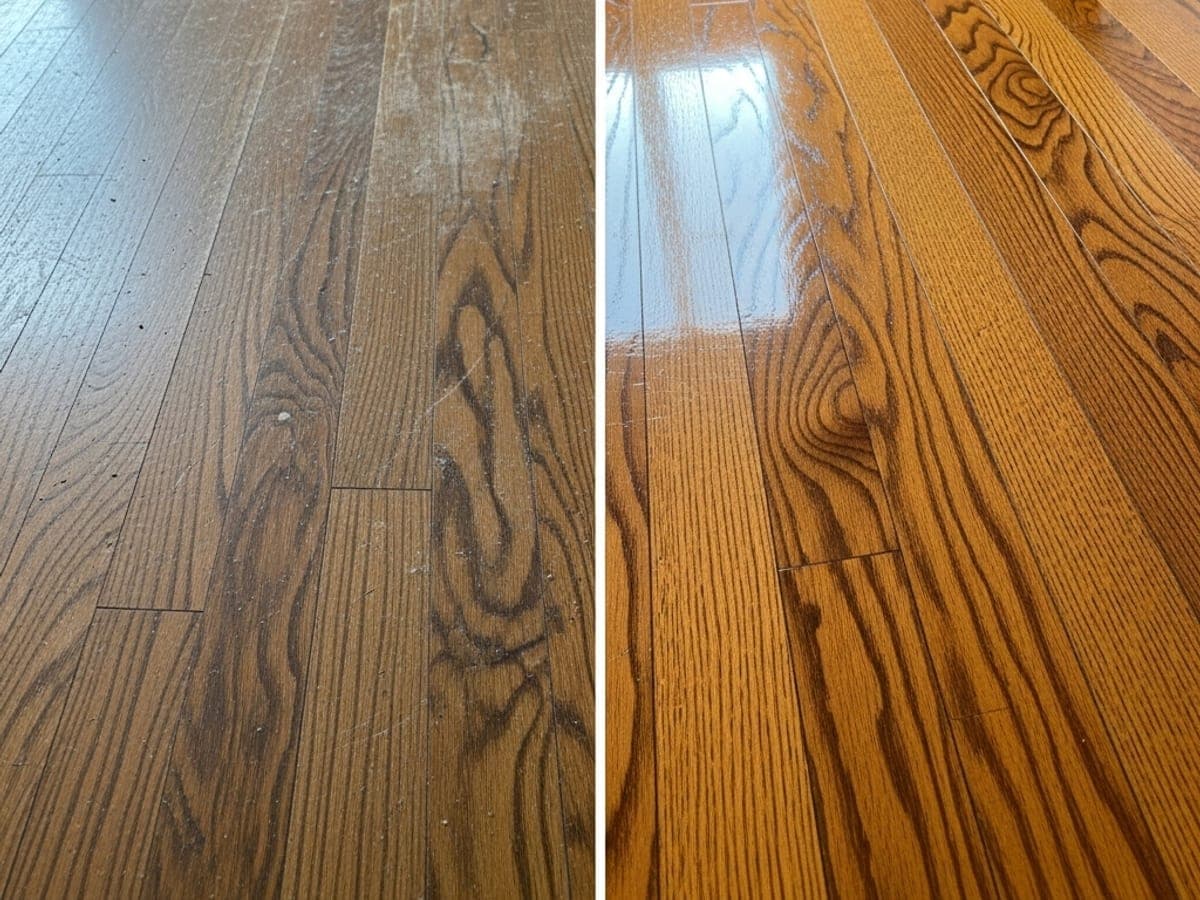
 BeforeAfter
Same floor, same day. Nothing sanded.
Backed by Safe-Dry® · 532 locations in 6 states · Same-day appointments · 100% Satisfaction or It’s FREE
Your floors are better than they look
Hardwood goes dull and hazy over time and almost everyone reads that as a worn-out finish. More often it’s a layer of accumulated residue from store-bought cleaning products, furniture polish overspray, and ground-in dust that has built up month after month. The wood and its finish are usually in better shape than they look from standing height.
The instinct is to mop harder or try a new product, and that makes it worse. Mop-and-shine formulas work by leaving a thin polymer coat behind on purpose, so each application adds another layer on top of the last one. Water-based cleaners also leave moisture sitting in the seams between boards, which eventually causes swelling or cupping if it happens often enough.
Safe-Dry® uses moisture-controlled equipment built for wood. We strip the accumulated film without saturating the boards or touching the finish underneath, then apply a protective coat that takes the daily wear so your actual finish doesn’t. You can see the whole process on our how hardwood floor cleaning works page.
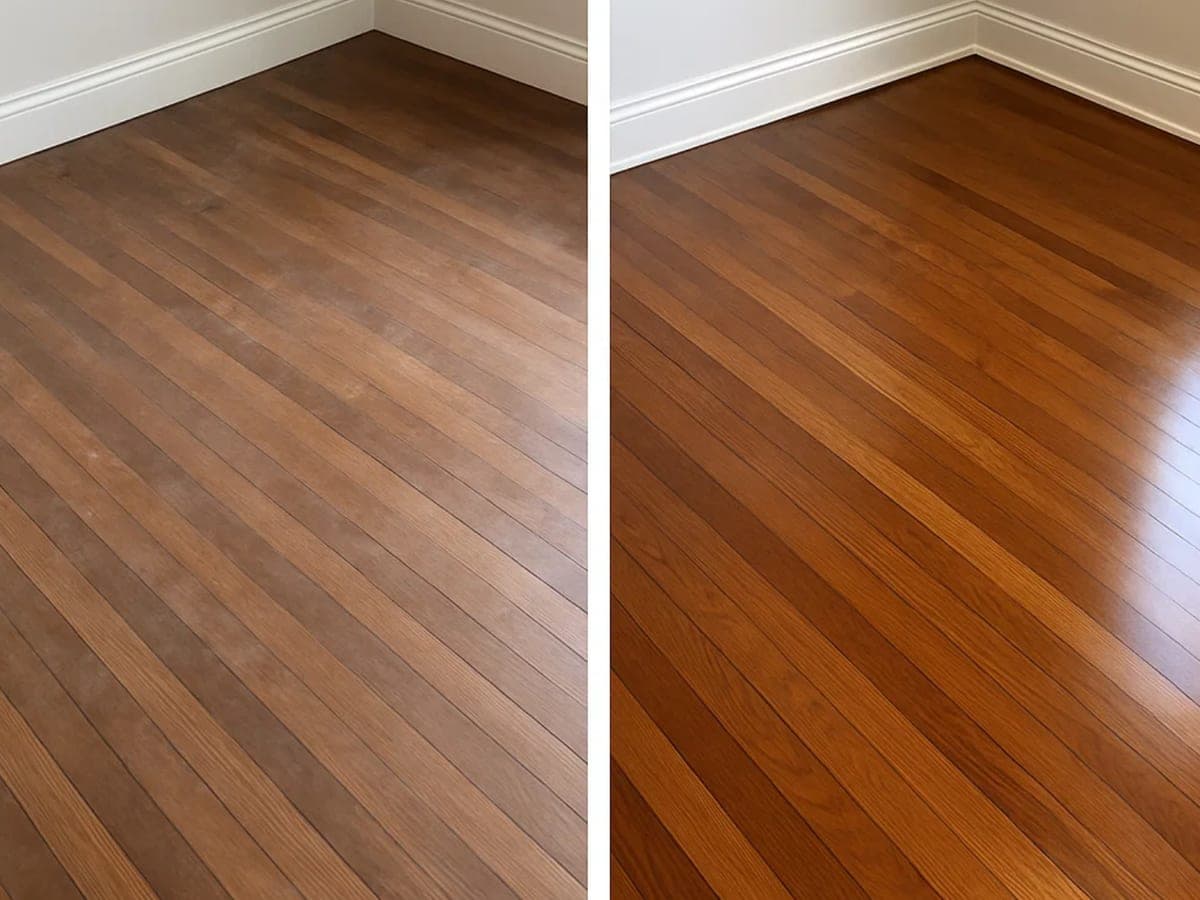
Left: years of product film. Right: the finish underneath.
How Safe-Dry® brings hardwood back
Four steps, no sanding, and you can walk on it within the hour.
Inspect and identify
Your technician confirms whether the floor is solid, engineered, or bamboo, checks whether the finish is intact, and finds the zones that need different handling. This is also where we tell you if a floor needs a refinisher instead of us.
Strip the buildup
A solution matched to your finish is applied in a metered amount, agitated into the accumulated film to dissolve it, and recovered in the same pass. Nothing pools, nothing runs into the seams, and the dissolved residue leaves with the machine.
Apply the protective coat
A water-based maintenance layer goes over the existing finish. It evens out sheen across boards that wore at different rates and takes the daily abrasion in place of the finish you can't easily replace.
Guarantee it
If you're not happy with the result, we make it right. Every hardwood job is backed by the Safe-Dry® 100% satisfaction guarantee.
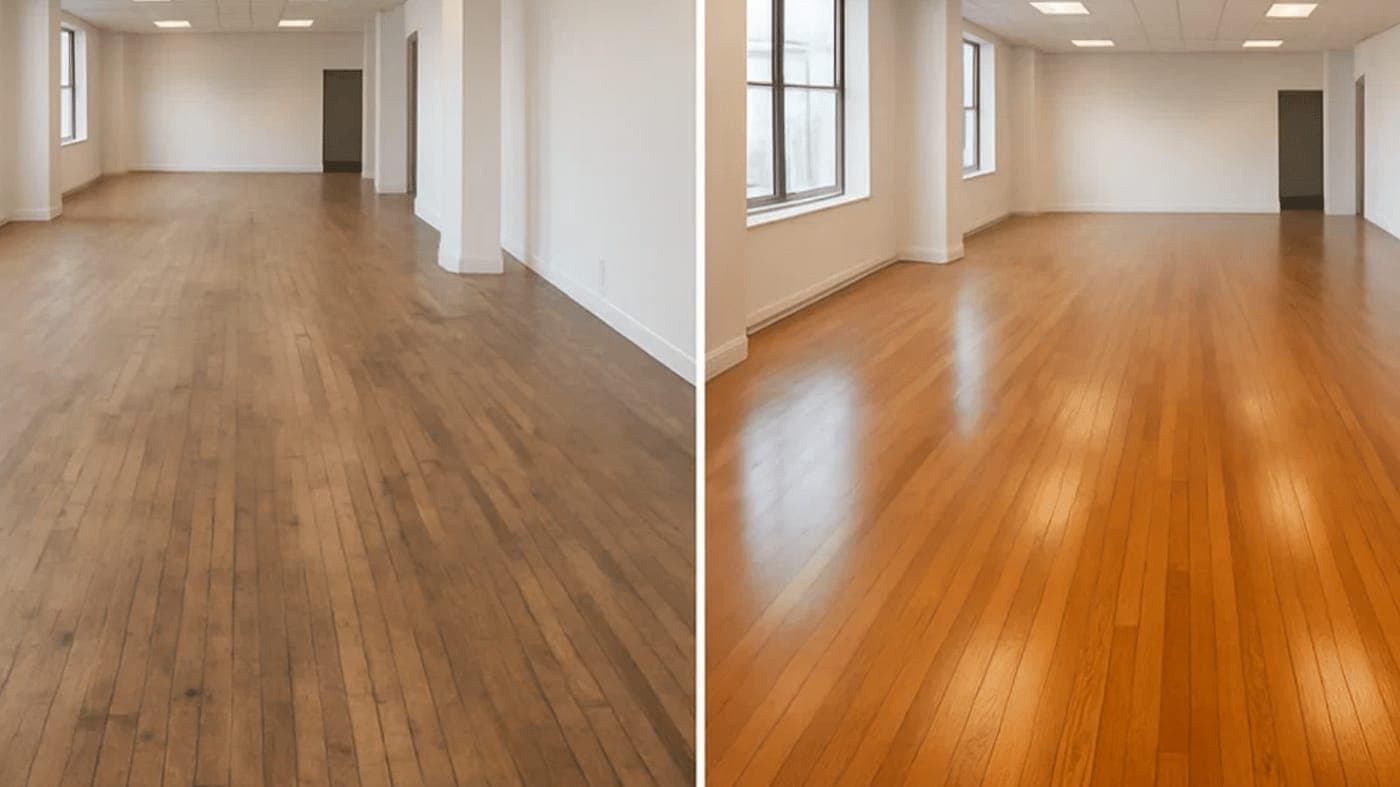
Where the buildup shows up first
Find the one that matches your floor to see what caused it and what can be recovered.
Cloudy or hazy floors
The milky film left behind by mop-and-shine products, one coat at a time. It comes off without sanding.
Dull floors, no shine
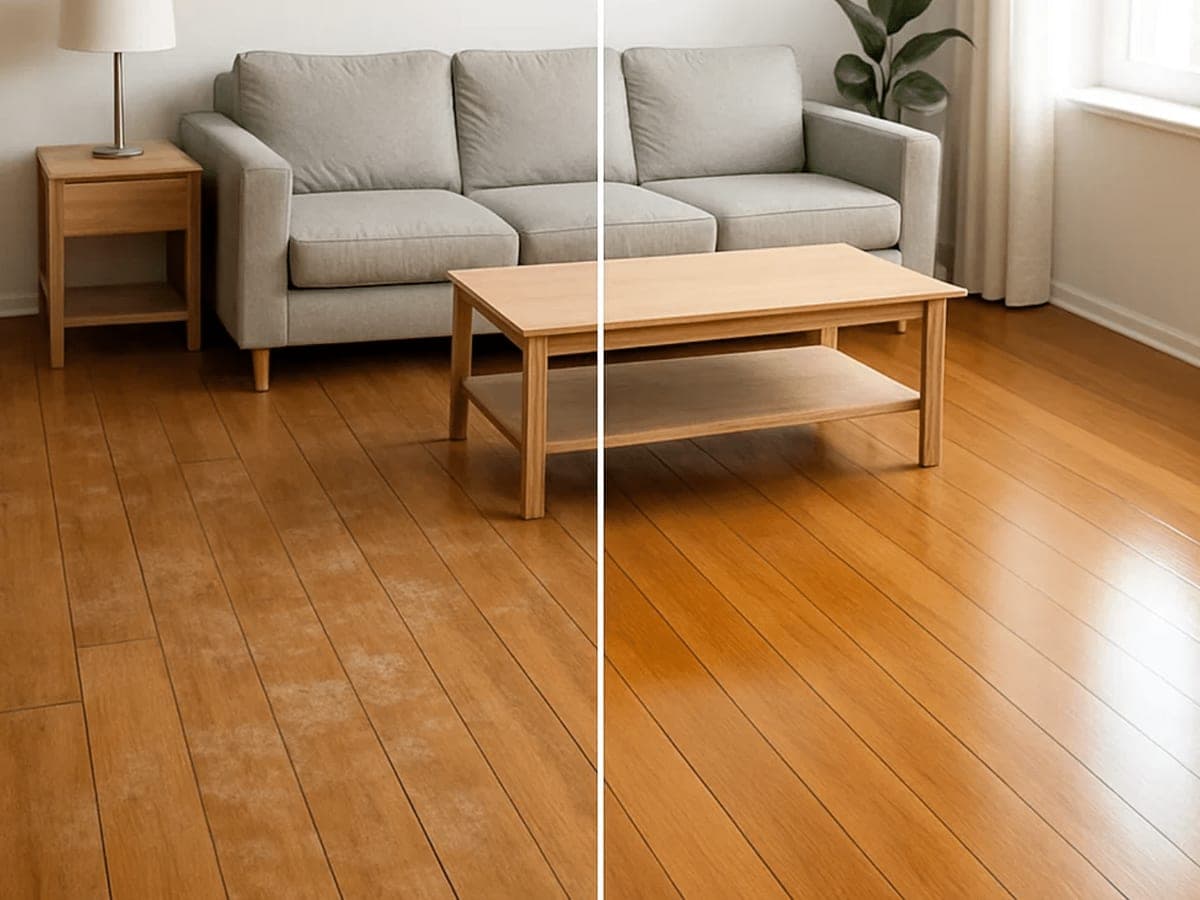
Sheen that's flattened out from residue, wear, or both. We test which one you have before quoting anything.
Kitchen floors
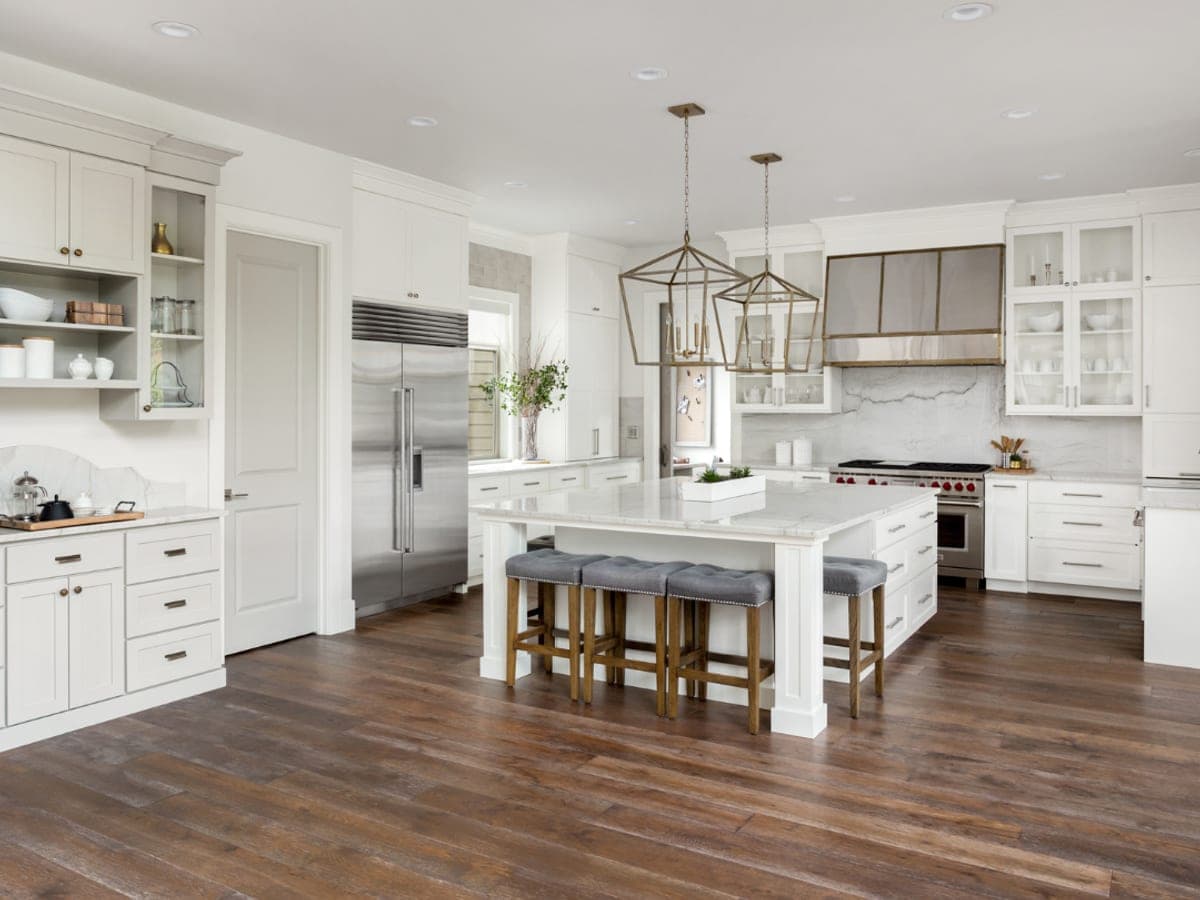
Cooking grease plus foot traffic. The darkest, dullest boards in the house are almost always in front of the range.
Pet stains & odor
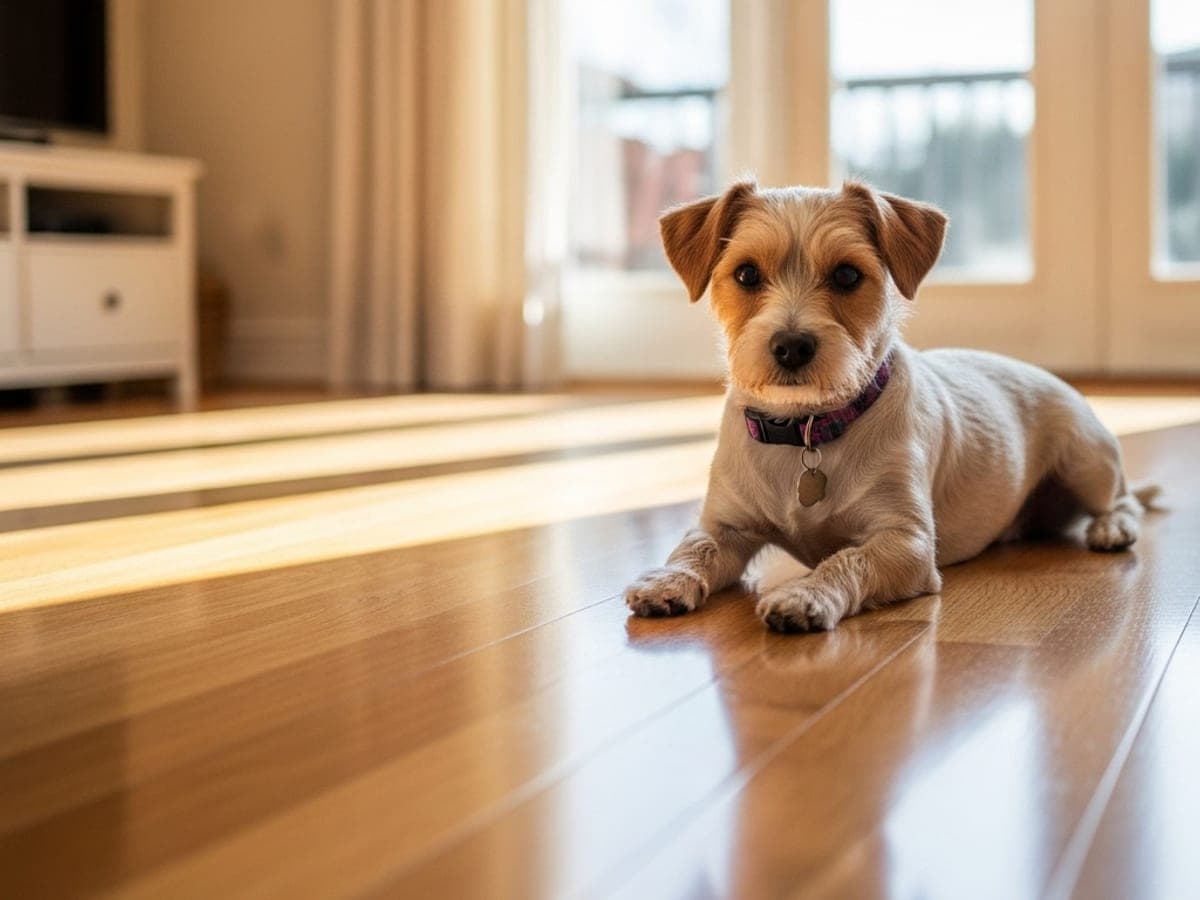
Urine that reached the seams before anyone noticed. We diagnose the stage first, then tell you what's recoverable.
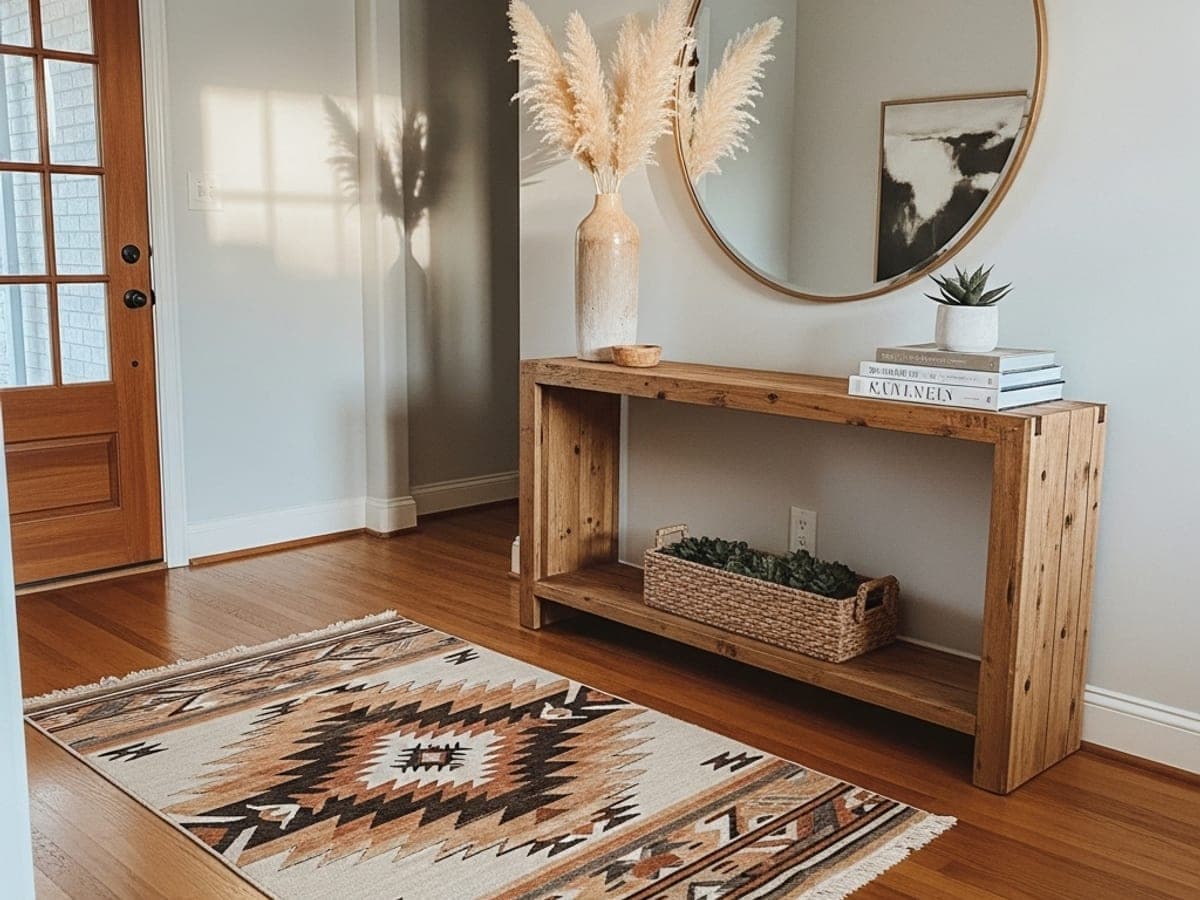
Entryways & hallways
Grit tracked in from outside acts like sandpaper on the finish. Entries take the worst of it.
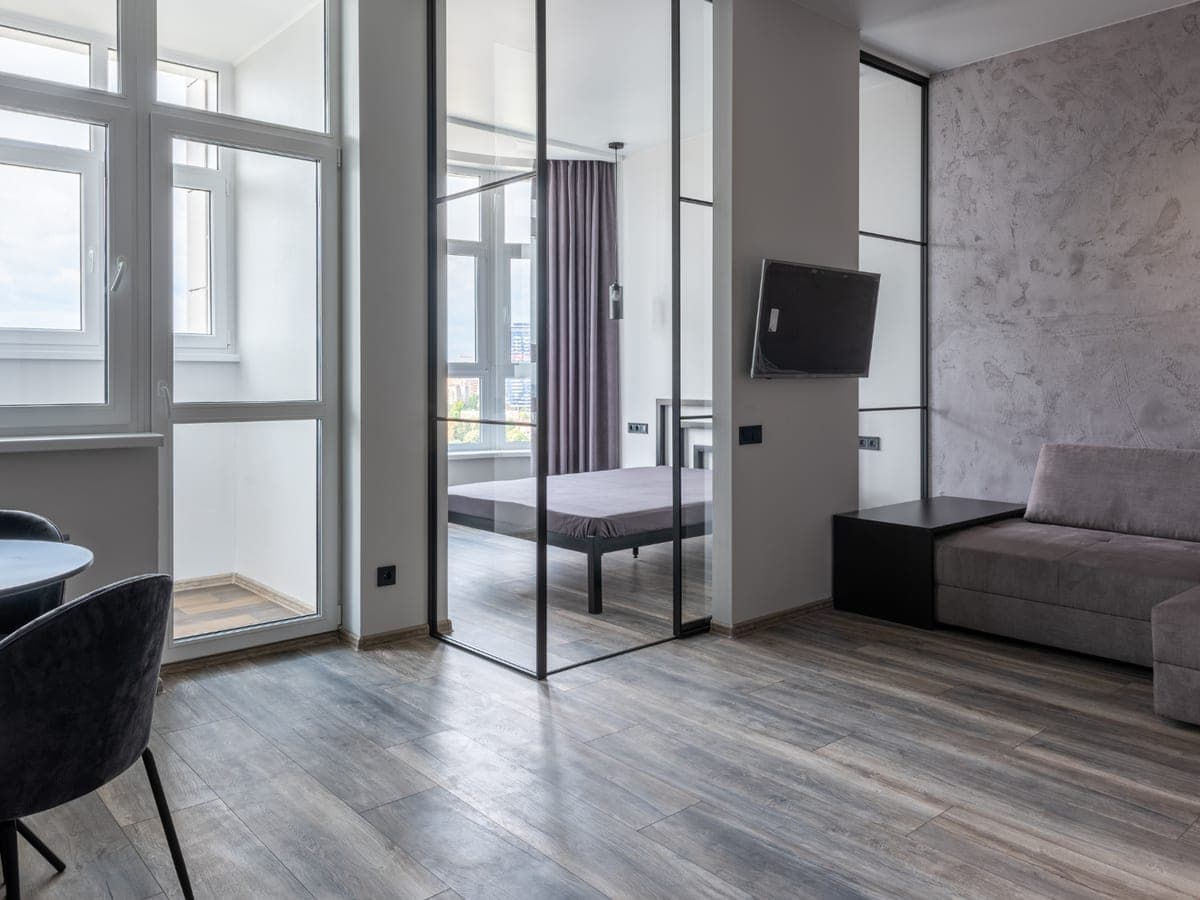
Engineered hardwood
A thin real-wood veneer over a glued core. Moisture control isn't a preference here, it's the whole job.
Put a few drops of water on your worst spot
If it beads up and sits there, your finish is intact and whatever is bothering you is sitting on top of it. That’s a cleaning job, and it costs a fraction of what sanding does. If it soaks in and darkens the wood, the finish is gone in that spot and you need a refinisher. We’ll tell you which one you have before quoting anything.
Limited Time Offer
$50 Off Hardwood Floor Cleaning
Safe on solid, engineered, and bamboo. Additional charges may apply for heavily soiled or oversized areas. Not valid with other offers.
Find Your Local Safe-Dry®Frequently asked questions
Will the cleaning damage my hardwood?
No. Our equipment meters out only as much solution as it can recover in the same pass, so there's no flooding, no pooling, and nothing left standing in the seams between boards. Standing water is what causes warping and cupping on wood, and this process is built specifically to avoid producing any.
How is this different from mopping?
A mop spreads a thin layer of dirty water and cleaning product across the floor and leaves most of it there to dry. Over years that dries into a film that dulls the finish and traps dust inside it. We dissolve that accumulated film and lift it off the floor instead of redistributing it, then apply a protective coat over the finish underneath.
Do you sand or refinish the floors?
No. This is deep cleaning and protective coating, not refinishing. If your floors genuinely need sanding and restaining, that's a different trade and we'll tell you so. What surprises most homeowners is how much better the floor looks once the buildup comes off, because the finish underneath is usually in better shape than it appeared.
What kind of protective finish do you apply?
A water-based protective coat that evens out the sheen and helps the floor resist daily wear between cleanings. It isn't a polyurethane refinish. Think of it as a maintenance layer that takes the abrasion so your actual finish doesn't, which extends how long you can go before refinishing ever comes up.
How long does it take to dry?
Usually thirty minutes to an hour, and you can walk on the floor as soon as it's dry to the touch. That fast turnaround is a direct consequence of how little moisture goes down in the first place.
Can you clean engineered hardwood and bamboo?
Yes, and moisture control matters even more on those. Engineered flooring has a thin real-wood veneer bonded to a core, and bamboo is a grass held together with adhesive, so both react badly to water that reaches below the surface. We match the chemistry and the agitation to the material, so engineered and bamboo don't get treated like solid oak.
How often should hardwood floors be professionally cleaned?
Every twelve to eighteen months for most homes, and annually for kitchens and main hallways. Between visits, the two habits that matter most are dry sweeping before you ever damp-mop, and keeping mats at every exterior door to stop grit at the threshold.
How much does it cost?
There's $50 off hardwood floor cleaning right now. Final pricing depends on square footage and the condition of the floor, and your technician gives you a firm number during the walkthrough before any work starts.
See the grain you paid for
Enter your zip code to reach your local Safe-Dry® team. We clean and protect hardwood across 532 locations in 6 states, with same-day appointments in most areas.