Entryway and Hallway Hardwood Floor Cleaning
The grit tracked in from outside is harder than your finish. Every step grinds it in a little further, which is why walkways wear first.

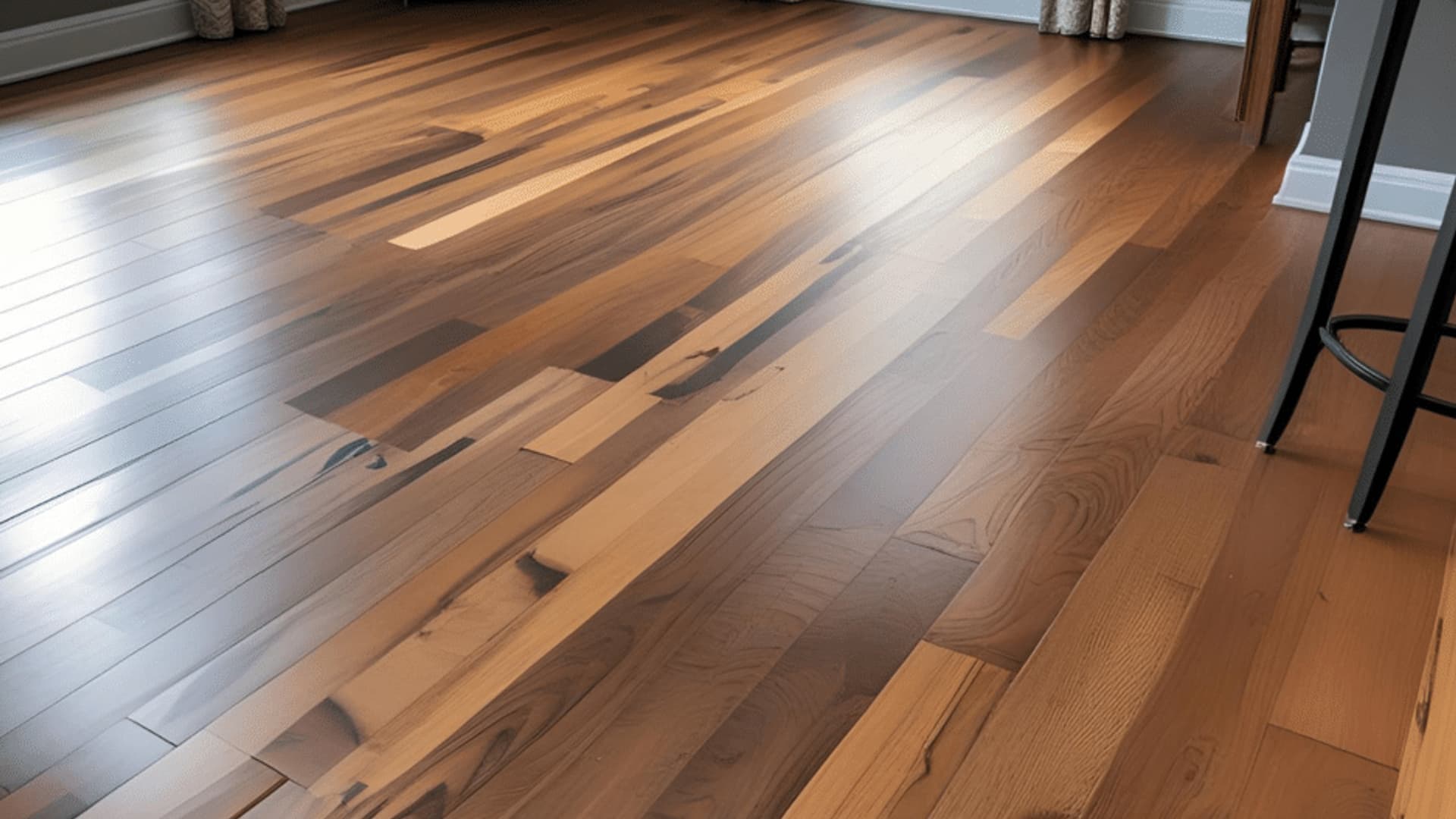
Every house has a path worn into it. It runs from the front door through the hall and into the kitchen, and it looks grayer and flatter than the floor on either side of it. That path isn't dirty in the way people assume. It's abraded, and the thing doing the abrading came in on the bottom of somebody's shoe.
Cleaning a traffic lane more often makes it worse
The natural response to a gray walkway is to clean it more often than the rest of the floor. That backfires in a specific way. Damp-mopping a lane that has grit sitting on it turns the grit into a slurry and drags it across the finish under pressure, which is essentially wet sanding. The floor looks better for an hour and is fractionally more worn afterward.
Spot-cleaning is the other trap. Because the lane looks worse, it gets scrubbed harder and more often than the surrounding floor, and over a few years that differential treatment creates a visible boundary. You end up with a hallway that has a distinctly different sheen from the rooms it connects, and the boundary is sharper than the wear alone would have made it.
The thing that would actually help gets skipped, which is dry removal. Sweeping or vacuuming lifts grit off the floor entirely. Every damp pass that happens before that step is a pass that grinds instead of cleans.
Grit is harder than your finish
Most of what comes in on shoes is mineral. Sand, quartz, road grit, and the crushed rock in driveway and sidewalk dust are all silica-based, and silica is substantially harder than any wood floor finish made. Body weight concentrated through a shoe heel presses those particles into the coating with real force, and the sliding motion of a step drags them across it.
That's the whole mechanism. It isn't feet wearing out the floor, it's the abrasive that feet are carrying. A barefoot household with the same traffic volume will have dramatically less lane wear than a shoes-on household, and the difference has nothing to do with cleaning habits.
The distribution follows physics too. Grit falls off shoes fastest in the first few steps inside a door, so the worst abrasion is concentrated in the entry and the first stretch of hallway, then tapers as you move into the house. If your dining room looks fine and your entry looks tired, that gradient is why. It also means a mat in the right place removes the problem before it starts, which is the single most useful thing any homeowner can do for their floors.
How much of a walkway comes back
A traffic lane is two problems stacked, and they recover differently. The residue and embedded soil component comes off completely, and that's usually more of the gray than people expect, because ground-in grit sits in the micro-texture and darkens it. Removing it typically lightens a lane noticeably in a single visit.
The abrasion component is real wear and it doesn't reverse. What the protective coat does is fill and level the fine scratching so the lane reflects light more like the rooms around it. The visual gap between hallway and dining room narrows a lot, which is what most people are actually asking for when they point at a walkway.
Where the finish has worn through entirely, usually a small patch right inside a heavily used door, we'll point it out and tell you it needs a refinisher. A coat over bare wood isn't a fix, it's a cosmetic delay, and it tends to look worse within a year than the bare patch did.
We walk through the full moisture-controlled process on our how hardwood floor cleaning works page, and every job is backed by our 100% satisfaction guarantee.
Want to try it yourself first?
Light, everyday dulling is worth a shot at home. Here is the honest version of what actually helps on wood, and the point where DIY hits its ceiling.
- 1
Put a real mat at every exterior door
Not a decorative one. You want something coarse enough to actually scrape a sole, and long enough that a person takes two or three steps on it. This does more for a hardwood floor than any cleaning product on the market.
- 2
Sweep before you ever damp-mop
Damp-mopping over loose grit is wet sanding. Dry removal first, every single time, and the mop stops being a wear mechanism.
- 3
Vacuum with the beater bar off
A rotating brush flings grit and can mark the finish itself. Use a hard-floor setting or a bare-floor attachment so you're lifting particles instead of whipping them around.
- 4
Treat the lane the same as the rest of the room
Resist the urge to scrub the walkway harder than everything else. Differential cleaning creates a differential sheen, and eventually the boundary you created is more visible than the wear was.
- 5
Know what a bare patch means
If a spot inside the door soaks up water instead of beading it, the finish is gone there. That's a refinishing job. Cleaning it will get you a clean bare patch, which isn't what you were after.
Frequently asked questions
Can you make my hallway match the rooms around it again?
Usually much closer, sometimes not identical. The gray in a walkway is partly ground-in soil, which comes out completely, and partly fine abrasion, which doesn't reverse. Cleaning handles the first part and the protective coat evens out the light reflection on the second, so the gap narrows substantially. If the finish has worn through in spots, those spots will still read differently.
Why does my entry look worse than the rest of the house?
Because grit falls off shoes fastest in the first few steps through a door. The entry takes the highest concentration of abrasive material in the whole house, then the amount tapers as people walk further in. It's the same reason a good mat at that door is worth more than anything else you can do.
Would area rugs in the hallway help or hurt?
Help, as long as they have a breathable pad and not a rubber-backed one. Rubber backing can trap moisture and react with some finishes, leaving a discolored outline. A felt or natural rubber pad avoids that and the rug catches grit before it reaches the finish.
Should high-traffic areas be cleaned more often than the rest?
Professionally, yes, roughly annually versus every twelve to eighteen months elsewhere. Day to day, no. Sweep the lane more often, but keep wet cleaning consistent across the whole floor so you don't create a sheen difference that outlasts the wear.
Do I really need to make people take their shoes off?
It's the single biggest variable, honestly. Two houses with identical traffic will wear at completely different rates depending on whether shoes come off at the door, because the damage comes from the grit riding in on the soles and not from the feet. We're not going to tell anyone how to run their house. But if you want one change that outperforms every product on the shelf, that's it, and a serious mat at the door gets you most of the way there without the argument.
Related hardwood floor problems we solve
Scuffs & surface marks
Furniture drag, shoe scuffs, and the dull ring around chair legs. Transfer comes off; gouges need a refinisher.
ProblemDull floors, no shine
Sheen that's flattened out from residue, wear, or both. We test which one you have before quoting anything.
RoomsKitchen floors
Cooking grease plus foot traffic. The darkest, dullest boards in the house are almost always in front of the range.
See the grain you paid for
Enter your zip code to reach your local Safe-Dry® team. We clean and protect hardwood across 532 locations in 6 states, with same-day appointments in most areas.