Do Your Floors Need Refinishing, or Just a Deep Clean?
Three tests you can run yourself this afternoon. Two of them take under a minute, and together they'll tell you which trade you actually need.
This is the question worth answering before you spend anything, because the two services differ by roughly an order of magnitude in cost and disruption. Refinishing means sanding your floors to raw wood, several days of dust and displacement, and a number that usually lands in the thousands. Cleaning is a few hours and a fraction of that. Plenty of people book the first when they needed the second, and the tests that tell them apart take about ten minutes.
Why floors look worse than they are
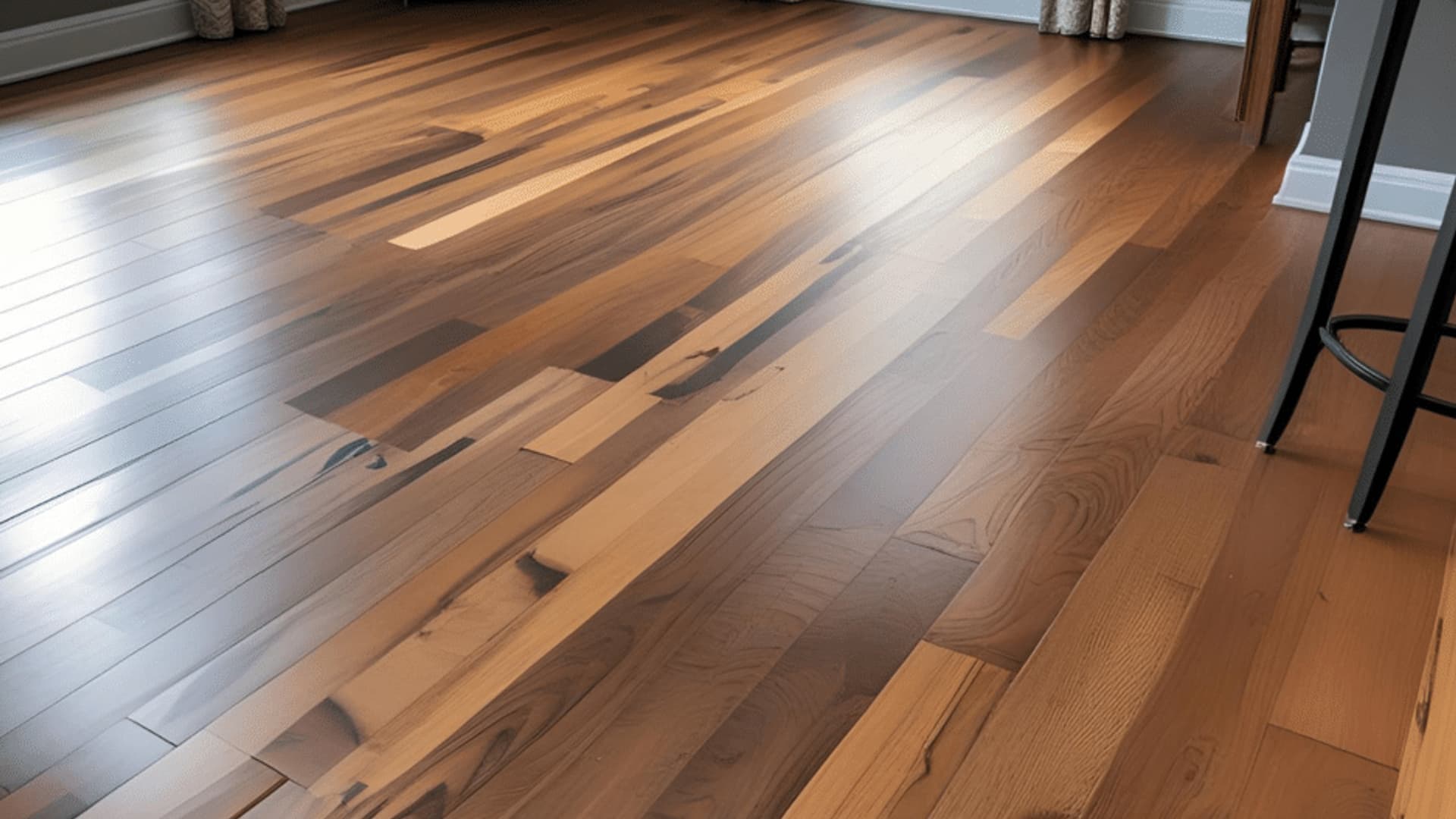
Almost every floor looks like it needs refinishing when you're standing over it in bad light, tired of looking at it. Dullness, haze, a gray walkway, and blotchy sheen are all symptoms that both problems produce, so visual judgment from standing height genuinely cannot separate them. Contractors get called out for estimates on floors that are structurally perfect and simply filthy in a way that isn't obvious.
The other direction happens too. Somebody deep cleans a floor whose finish is worn through in the traffic lane, gets a clean floor that still looks bad, and concludes that cleaning is a scam. It wasn't. The diagnosis was wrong before anyone started, which is a failure of whoever quoted the job.
The confusion is worth real money in both directions, so it's worth ten minutes to resolve properly. None of what follows requires a professional or any special equipment.
Water beads, you need us. Water soaks in, you need a refinisher. That one test settles most of these before anyone quotes anything.
The three tests, and what each one proves
Test one is the water drop. Put a few drops of water on the worst-looking area and wait two minutes. If the water beads up and sits there, your finish is intact and doing its job, which means whatever you're unhappy about is sitting on top of it. That's a cleaning problem. If the water soaks in and darkens the wood, the finish is gone at that spot and there's nothing protecting the wood. That's a refinishing problem, and it isn't optional, because bare wood absorbs everything that touches it from here on.
Test two is the hidden area. Compare an open stretch of floor to a patch that's spent years under a rug, inside a closet, or beneath a bookcase. If the hidden patch looks dramatically better, then the difference between them is accumulated buildup and wear, and the good news is that the buildup half is fully recoverable. If the hidden patch looks equally tired, you're looking at finish degradation across the whole floor, not surface accumulation.
Test three is the fingernail. Drag a nail across a mark. Glides over means it's on the surface. Catches in a groove means material has been cut out of the finish. A floor covered in marks that catch is a floor that needs sanding, because the only way to level a groove is to bring the surrounding surface down to it.
What we do, and when we send you elsewhere
If the water beads, the hidden area looks much better than the open floor, and most marks glide, you almost certainly need a deep clean rather than a refinish. That's our job. We strip the accumulated film with controlled moisture, put the sheen back, and apply a water-based protective coat over the existing finish so daily wear lands on the coat instead of on the coating you can't replace.
If the water soaks in, we'll tell you on the walkthrough and we won't sell you a cleaning. There's no version of a maintenance coat that fixes a worn-through finish, and applying one over bare wood tends to look acceptable for a few months and noticeably worse by the end of the year. That's a refinisher's job, it's a different trade, and we don't do it.
The genuinely common outcome is a floor that's mostly fine with one bad zone, usually a doorway or the strip in front of the sink. In that case cleaning and coating the house makes sense and the bad zone stays a known issue until you're ready to have that area addressed. We'll say which category yours is in before quoting anything, because getting this wrong wastes your money and costs us a callback either way.
We walk through the full moisture-controlled process on our how hardwood floor cleaning works page, and every job is backed by our 100% satisfaction guarantee.
Want to try it yourself first?
Light, everyday dulling is worth a shot at home. Here is the honest version of what actually helps on wood, and the point where DIY hits its ceiling.
- 1
Run the water test in the worst spot you have
Not the middle of a bedroom. Pick the single most tired-looking area, usually a doorway or in front of the sink, because that's where the finish will have failed first if it's failed at all.
- 2
Move a rug and compare
Pull back a rug that's been down for years, or open a closet on the same run of flooring. The gap between covered and exposed is your buildup-plus-wear total, and buildup is the recoverable part of it.
- 3
Check whether the dull areas match the walking paths
Dull where people walk means wear. Dull everywhere including under furniture means film. Dull only in the rooms you mop most means film, and a lot of it.
- 4
Do the fingernail check on your worst marks
If most of them glide, cleaning will change how the floor looks quite a bit. If most of them catch, temper your expectations, because grooves don't fill in.
- 5
Total it up before you call anyone
Beading water plus a big difference under the rug plus marks that glide is a cleaning job with a good outcome. Water soaking in plus no difference under the rug is a refinishing job, and any cleaner who tells you otherwise is not being straight with you.
Frequently asked questions
How much cheaper is cleaning than refinishing?
Substantially, and the gap is usually the deciding factor once people know which they need. Refinishing means sanding to raw wood, multiple coats, several days of disruption, and moving out of the affected rooms. A deep clean and protective coat is a few hours and a small fraction of the cost. Your technician quotes a firm price at the walkthrough based on square footage and condition.
Can cleaning delay a refinish I know I'll eventually need?
Often by years, as long as the finish is still intact. The protective coat takes the daily abrasion that would otherwise be spent on your actual finish, so the clock on refinishing slows down. Once the finish is worn through somewhere, that spot is past delaying and cleaning won't hold it back.
Will you tell me if I need a refinisher instead?
Yes, and we'd rather do that than take the job. Selling a cleaning to somebody whose finish has failed produces an unhappy customer and a refund, so it's bad business as well as dishonest. If the water test fails on your floor, we'll say so and explain what you're actually looking at.
Do you sand or screen and recoat with polyurethane?
No to both. We don't sand and we don't apply polyurethane. Our service is a deep clean followed by a water-based maintenance coat over the finish you already have. Screen-and-recoat is a refinisher's service and needs a different setup than ours.
Related hardwood floor problems we solve
Dull floors, no shine
Sheen that's flattened out from residue, wear, or both. We test which one you have before quoting anything.
ProblemCloudy or hazy floors
The milky film left behind by mop-and-shine products, one coat at a time. It comes off without sanding.
ProblemScuffs & surface marks
Furniture drag, shoe scuffs, and the dull ring around chair legs. Transfer comes off; gouges need a refinisher.
See the grain you paid for
Enter your zip code to reach your local Safe-Dry® team. We clean and protect hardwood across 532 locations in 6 states, with same-day appointments in most areas.