Why Your Hardwood Floors Look Cloudy
That milky, streaky look is a layer of dried cleaning product, not a failing finish. It builds one coat at a time, and it comes off.
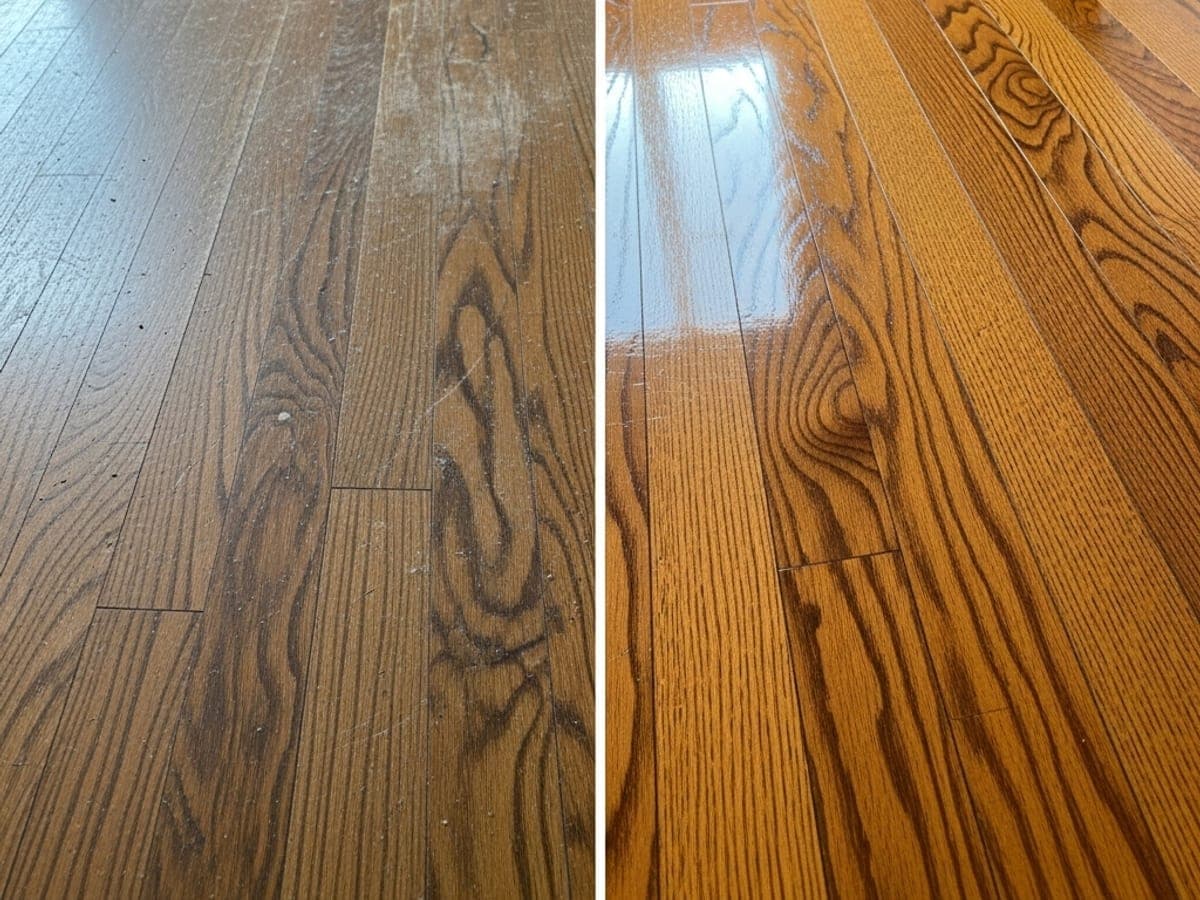
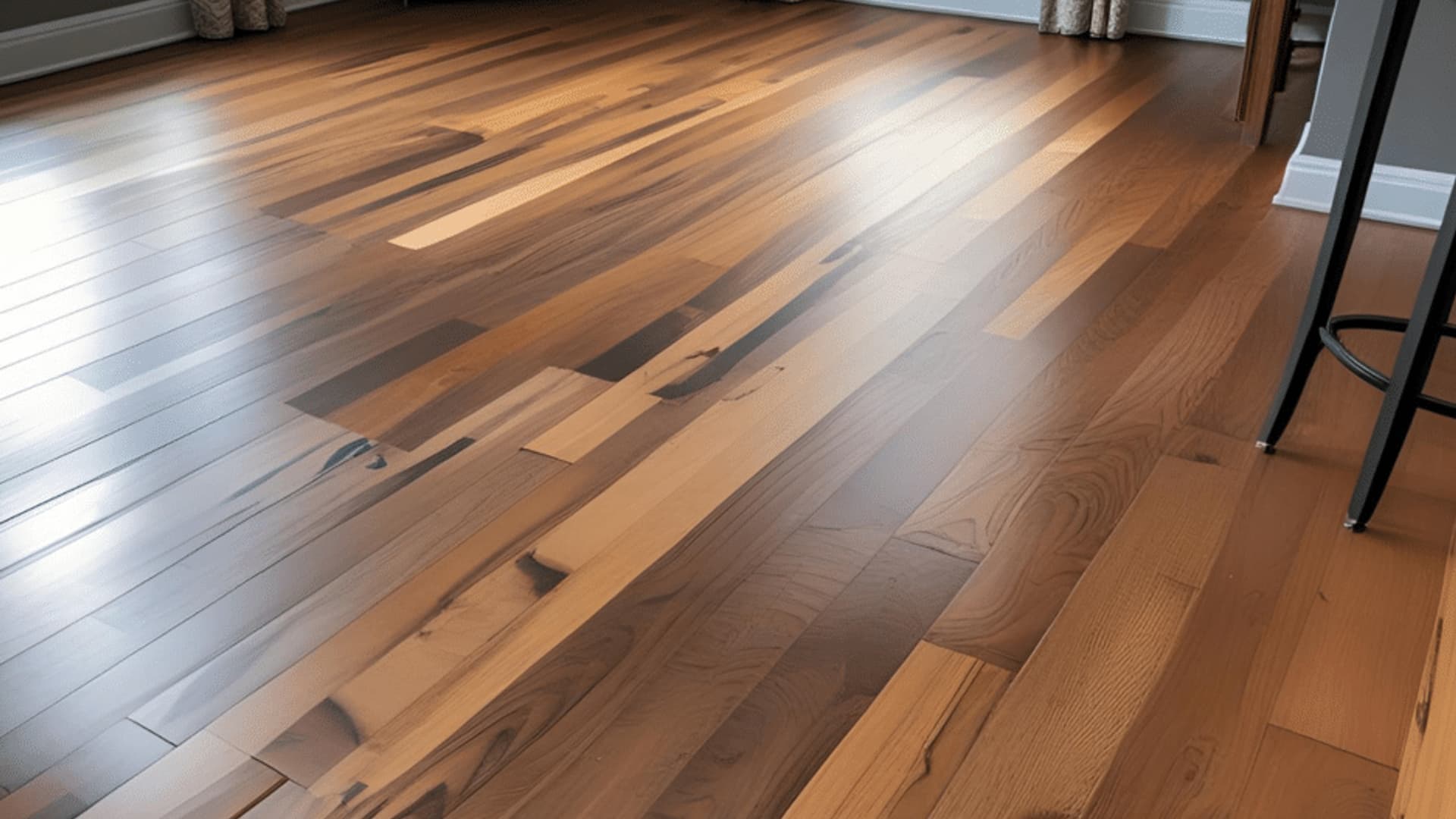
A cloudy hardwood floor sends most homeowners straight to a refinishing quote, and that's usually the wrong call. Haze that appears gradually, gets worse in the rooms you clean most, and looks blotchy instead of evenly worn is a product problem, not a finish problem. Something is sitting on top of your floor. The fix is to take it off.
The product that caused it can't remove it
The natural response to a cloudy floor is to clean it again, usually with the same bottle that's been under the sink for two years. That's the trap. Mop-and-shine products work by leaving something behind on purpose. They contain acrylic polymers that dry into a thin gloss layer, and that layer is the whole product. Applying more of it doesn't dissolve the old coat. It adds another one on top.
This is why the haze gets worse in the rooms you clean most often. The hallway you damp-mop every week has eight or nine layers on it. The guest bedroom nobody walks through has one. Homeowners often notice the difference at a doorway, where a clean-looking board meets a hazy one, and assume the finish wore unevenly. It didn't. The mop just stopped at the threshold.
Vinegar and water is the other common attempt, and it makes a different mess. It's too weak to cut a cured polymer film, so it mostly just re-wets the top of it and leaves streaks as it dries. What you end up with is a floor that looks briefly better while it's damp and slightly worse once it's dry, which is the same pattern the original product created.
What haze actually is, physically
Gloss is a matter of flatness. When a surface is optically smooth, light bounces off it in one direction and your eye reads that as shine. When the surface is rough at a microscopic level, the same light scatters in every direction and your eye reads that as cloudy. Nothing about the wood changed. The path the light takes changed.
A polymer coat doesn't dry as one perfect sheet. It dries around whatever was on the floor when you applied it, which is dust, hair, grit, and a little of the last coat that softened when it got wet. Each layer locks in that texture and adds its own. Stack enough of them and you have a rough, slightly opaque film with dirt suspended inside it, sitting directly between you and the finish you paid for.
The tell is depth. If you crouch down at a low angle to a window, real finish wear looks like the sheen has thinned in a traffic path with the grain still crisp underneath. Buildup looks like a fog floating slightly above the wood, and the grain looks softened or smeared. Once you've seen the difference from that angle, it's hard to unsee.
How Safe-Dry® brings it back
The job is to break down the film without soaking the wood underneath, which is the balance the whole service is built around. Safe-Dry® uses a moisture-controlled machine that applies a measured amount of solution, works it into the film to dissolve it, and lifts it back off in the same pass. There's no bucket, no flooding, and no standing water sitting in the seams between boards.
Once the film is gone, the finish underneath is usually in far better shape than the homeowner expected, because it's been under a protective layer of junk the entire time. That's the moment most people realize they were about to pay for a refinish they didn't need. We finish with a water-based protective coat that restores an even sheen and gives the floor something to wear against besides the finish itself.
This is a cleaning and protection service, not a refinishing job. We don't sand and we don't re-stain. If the haze turns out to be a finish that's genuinely worn through in spots, we'll tell you that on the walkthrough instead of selling you a service that won't fix it.
We walk through the full moisture-controlled process on our how hardwood floor cleaning works page, and every job is backed by our 100% satisfaction guarantee.
Want to try it yourself first?
Light, everyday dulling is worth a shot at home. Here is the honest version of what actually helps on wood, and the point where DIY hits its ceiling.
- 1
Find out whether it's film or finish first
Pick a spot in a closet or under a piece of furniture that's never been mopped. If that patch is clear and the open floor is hazy, you have buildup. If the hidden patch is hazy too, you're looking at something else and cleaning won't touch it. Either way, put the shine product away before you start. Anything advertising shine, polish, or restore is depositing a coat, and you'll otherwise be removing and reapplying in the same afternoon.
- 2
Test a residue remover on one board
Use a cleaner labeled for stripping wood-floor residue, applied to a cloth and not poured on the floor, and work a single board near a wall. Give it a minute to soften the film before you wipe. If that board comes out noticeably clearer, buildup is confirmed.
- 3
Work small and dry as you go
Dissolved film is sticky and it will re-deposit the second it starts to dry. Do a few square feet at a time and follow immediately with a dry microfiber. Never let a wet section sit while you go work on another one.
- 4
Know where the ceiling is
Hand-stripping works on a small area and stops being realistic somewhere around a single room. Multiple layers cured over several years need machine agitation with controlled moisture to come off evenly, and doing it by hand across a whole house usually ends with a floor that's clean in patches.
Frequently asked questions
Is a cloudy floor a sign the finish is worn out?
Usually not. Worn finish shows up as thinning sheen along the paths people actually walk, with the wood grain still sharp underneath. Cloudiness that covers a whole room, including spots nobody walks on, is almost always a film of dried cleaning product. The quickest way to tell is to compare an area under furniture to the open floor. If the hidden spot looks better, it's buildup.
Will you sand or refinish my floors to get rid of the haze?
No. This is a deep cleaning and protective coating service. We remove the film that's causing the haze and apply a water-based maintenance coat over the existing finish. Sanding and re-staining is a different trade, and if your floors genuinely need it, we'll say so instead of taking the job.
How much water goes on the floor?
Only what the machine can pick back up. Our equipment meters the solution out and recovers it in the same pass, so there's never standing water pooling in the seams between boards. That's the part that matters on wood, because water sitting in a seam is what causes cupping and swelling later.
Will the haze come back?
Not unless it gets rebuilt. The film came from repeated use of shine or polish products, so the fix is to switch to a pH-neutral hardwood cleaner and a barely damp microfiber going forward. The protective coat we leave behind also gives you a surface that cleans up with plain technique instead of needing a product that deposits gloss.
Related hardwood floor problems we solve
Dull floors, no shine
Sheen that's flattened out from residue, wear, or both. We test which one you have before quoting anything.
ProblemSticky or tacky floors
Tacky floors are leftover soap that never got rinsed. It grabs dust and gets worse in humid weather.
DecisionClean or refinish?
Three tests you can run yourself to find out which trade you need before anyone quotes you.
See the grain you paid for
Enter your zip code to reach your local Safe-Dry® team. We clean and protect hardwood across 532 locations in 6 states, with same-day appointments in most areas.