Why Hardwood Floors Feel Sticky After Cleaning
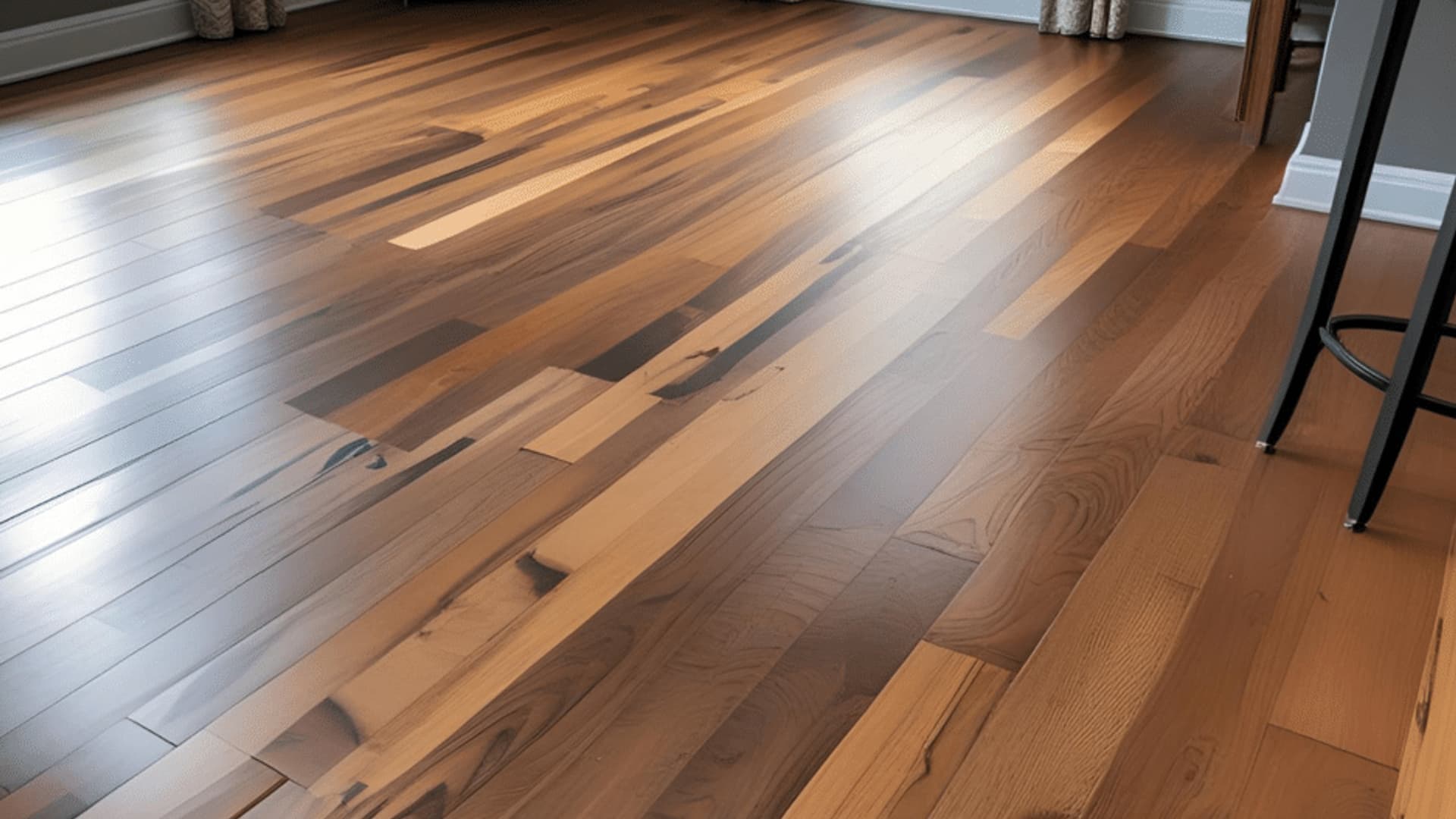
Tackiness is leftover soap that never got rinsed off. It pulls moisture out of the air, grabs every particle of dust, and gets worse the more you clean.
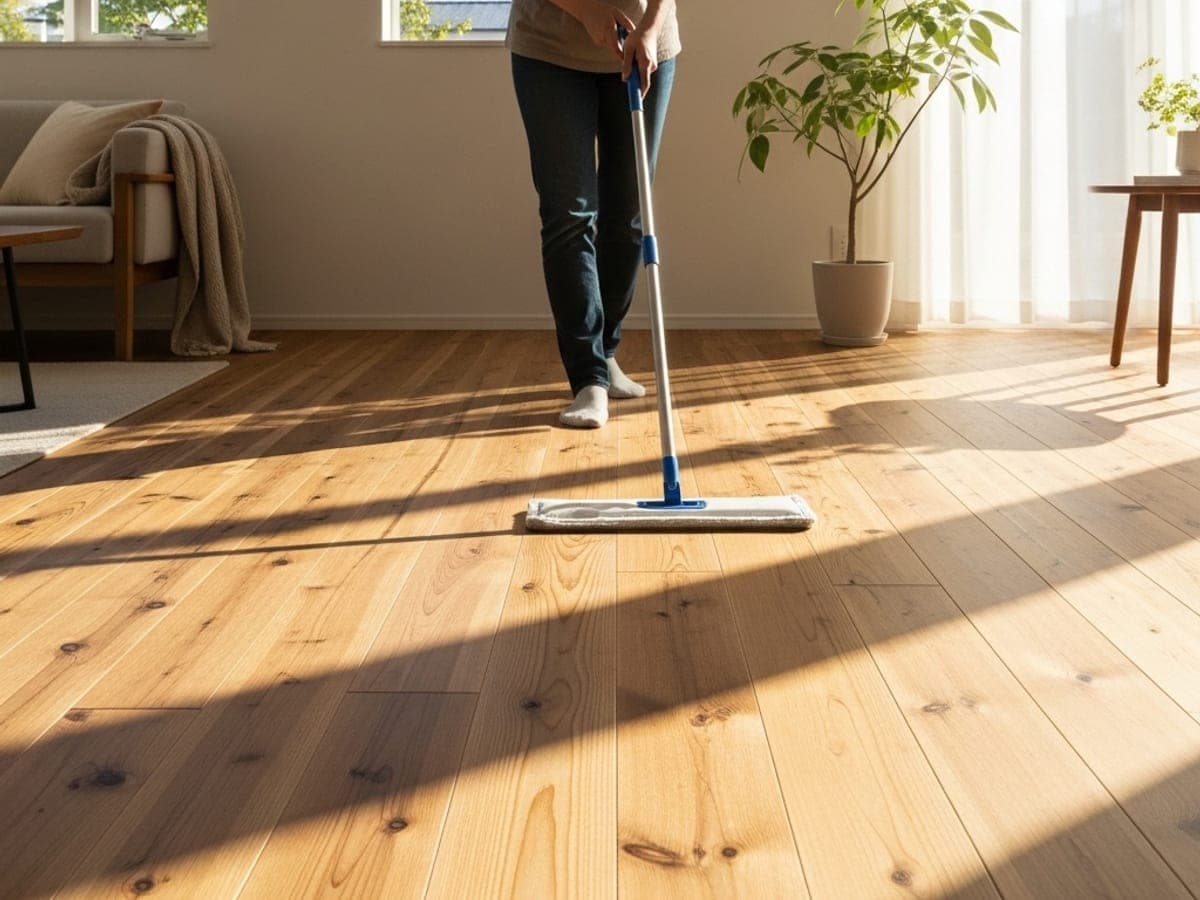
A floor that's sticky right after you mopped it feels like a personal insult. You just cleaned it. The reason it's tacky is that you cleaned it with something that didn't fully leave, and what's left behind is doing exactly what it was designed to do: hold onto things.
More cleaner is the wrong direction
When a floor feels sticky, almost everyone assumes it isn't clean yet and goes over it again. That's the loop. The stickiness came from cleaner that stayed on the floor, so the second pass adds more of the same thing, and now you have twice as much of it. People can run this cycle for months and describe the result as a floor that's never quite clean.
The other version of this is dosing. Hardwood cleaner concentrates are formulated to be diluted, and a capful in a bucket looks so insignificant that people pour a glug instead. At the right dilution the surfactants lift soil and evaporate off with the water. At four times the dilution there's more surfactant than the water can carry away, and the excess stays put.
Steam mops make their own version of this problem. They don't add soap, but they soften and re-wet whatever residue is already there, spread it evenly across a wider area, and drive moisture into board seams while doing it. A floor that was sticky in the kitchen becomes a floor that's faintly sticky everywhere.
Sticky floors are almost always a conscientious-owner problem. The residue came from cleaning often, with a little too much product, and never being able to truly rinse.
Why soap stays tacky instead of drying hard
Surfactants are hygroscopic, which is a technical way of saying they pull water vapor out of the air and hold it. That's why residue never fully dries. On a humid August afternoon in Nashville or Houston, a floor with soap residue on it will feel noticeably tackier than the same floor felt in January, and homeowners often report the problem as seasonal without realizing the residue was there the whole time.
That tacky layer then behaves like flypaper. Ordinary house dust that would normally slide across a finished floor and get swept up instead sticks where it lands and stays. Within a few weeks the residue isn't just sticky, it's gray, because it's full of everything that's touched it. This is the mechanism behind the very common complaint that a floor gets dirty faster after cleaning than it did before.
There's a compounding effect too. Sticky floors get cleaned more often, because they feel wrong. More cleaning means more residue, which means more dust capture, which means more cleaning. Almost every badly residue-loaded floor we see belongs to somebody conscientious. It's not neglect. It's the opposite.
How Safe-Dry® brings it back
Residue removal is a rinsing problem, and rinsing is the thing you can't really do properly with a bucket and a mop on wood, because the rinse water becomes soap water within about thirty seconds. Our machine solves that by keeping clean solution and recovered dirty solution completely separate. Fresh solution goes down, dissolves the residue, and comes straight back up with the residue in it. Nothing gets re-spread. Because moisture is metered rather than poured, we can do that on wood without the water finding its way into the seams. That's the constraint that makes hand-rinsing hardwood such a bad idea and why this ends up being a job worth handing off.
With the residue gone, the floor stops attracting dust at the rate it was, and the protective coat we finish with gives you a clean, sealed surface that responds to a barely damp microfiber. Most homeowners find they need to clean less often afterward, which is a strange thing to hear from someone who cleans floors for a living, but it's what happens when the flypaper comes off.
We walk through the full moisture-controlled process on our how hardwood floor cleaning works page, and every job is backed by our 100% satisfaction guarantee.
Want to try it yourself first?
Light, everyday dulling is worth a shot at home. Here is the honest version of what actually helps on wood, and the point where DIY hits its ceiling.
- 1
Cut your dilution in half and see what changes
Before you strip anything, just try mixing your existing cleaner at half the concentration you've been using for two weeks. If the tackiness eases off, you've found your cause and you can stop there.
- 2
Wring the mop until it's barely damp
A mop head that drips is putting down more liquid than the floor can evaporate before it pools. Damp enough to darken the wood slightly, dry to the touch within a minute, is the target.
- 3
Do a plain-water pass afterward
Go back over the same area with a clean microfiber and nothing but water, changing the water the moment it looks cloudy. This is the rinse step almost nobody does, and it's the one that decides whether residue accumulates.
- 4
Retire the steam mop on wood
Steam is a great tool on tile and a bad one on hardwood. It forces moisture into seams and softens existing residue without removing it. If the floor got tacky around the time a steam mop entered the house, that's not a coincidence.
- 5
Recognize a multi-year layer
If half-strength cleaner and a rinse pass haven't changed anything after a few weeks, the residue is thicker than surface rinsing can reach. At that point it needs machine extraction with separated clean and dirty solution, which is the only way to rinse wood without soaking it.
Frequently asked questions
Why is my floor stickier in summer than in winter?
Because soap residue absorbs humidity out of the air. The residue is there year-round, but in dry winter air it hardens enough to feel almost normal, and in humid months it softens and turns tacky again. If your floor has a season, you have residue.
I only use water. Why is my floor still sticky?
Water alone doesn't create tackiness, but it does reactivate residue that's already there from previous products, spread it thinner and wider, and leave it to re-dry. It's also worth checking anything else that touches the floor, like furniture polish overspray or a carpet cleaner used in an adjoining room.
Will stripping the residue damage my finish?
No. We're dissolving a water-soluble soap layer sitting on top of the coating, not attacking the coating itself. The solution is matched to the finish and the moisture is recovered in the same pass, so nothing sits on the floor long enough to work on it.
How long until it feels normal again?
Immediately, and it stays that way as long as the residue doesn't get rebuilt. Most of the floors we treat for this were being cleaned weekly with too much product. Switching to a pH-neutral cleaner at the labeled dilution keeps it from coming back.
Related hardwood floor problems we solve
Cloudy or hazy floors
The milky film left behind by mop-and-shine products, one coat at a time. It comes off without sanding.
RoomsKitchen floors
Cooking grease plus foot traffic. The darkest, dullest boards in the house are almost always in front of the range.
ProblemDull floors, no shine
Sheen that's flattened out from residue, wear, or both. We test which one you have before quoting anything.
See the grain you paid for
Enter your zip code to reach your local Safe-Dry® team. We clean and protect hardwood across 532 locations in 6 states, with same-day appointments in most areas.