Pet Stains and Odor on Hardwood Floors
Where the urine stopped decides what's fixable. We'll tell you which of the three stages you're looking at before we quote anything.
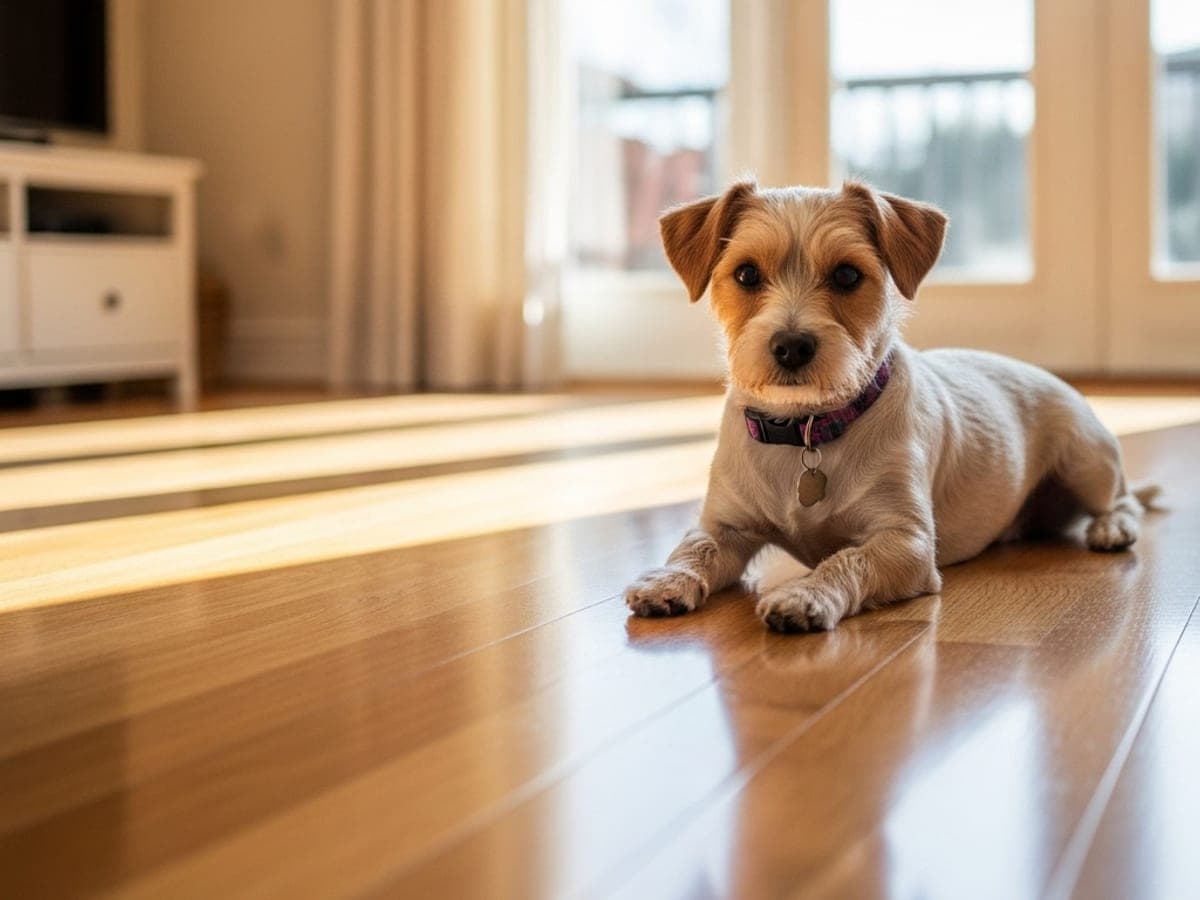
Pet damage on hardwood is the one area where we have to be careful about what we promise, because the outcome depends entirely on how far the urine got before it dried. On the finish, it's straightforward. Into the wood, it's harder. Into the subfloor, cleaning isn't the answer and nobody should tell you otherwise.
Why the smell keeps coming back after you clean
The usual sequence is paper towels, then a spray cleaner, then something stronger when the smell returns on the first humid day. Each round takes care of what's on the surface and none of them reach what soaked in, which is why the problem feels like it keeps coming back when really it never left.
Bleach and ammonia both make things worse in specific ways. Bleach lightens the wood unevenly and leaves a pale patch that's more noticeable than the stain was. Ammonia is a component of urine odor, so to a dog it reads as a scent marker, and the same spot gets used again.
Then there's the flooding instinct: pour enzyme cleaner on and let it sit, the way you would on carpet. On carpet that's correct. On wood, standing liquid is the exact thing that drives the contamination deeper and swells the boards while it works. The advice that's right for one surface is actively harmful on the other.
A black stain and a lingering smell are two different problems. Cleaning helps the smell. It doesn't lift the stain, because that's a chemical reaction in the wood.
The three stages of pet damage on wood
Stage one is finish-level. The urine sat on an intact coating and never got through. The stain wipes up, the odor is on the surface, and this is an ordinary cleaning job with a very good outcome. Fresh accidents on a well-finished floor usually stay here.
Stage two is wood-level, and it happens at the seams. Board edges and end joints are where the finish is thinnest and where liquid finds a path down by capillary action. Once urine is in the wood, its salts crystallize in the grain and stay dormant until humidity rises, at which point they re-dissolve and the smell comes back. That's the mechanism behind the classic complaint that a floor smells fine in winter and terrible in July.
Wood-level damage often also shows as a dark or black stain, which is a chemical reaction between urine and the tannins in the wood, not dirt. Cleaning improves the odor here. It does not remove a black stain.
Stage three is subfloor-level, and at that point the wood you can see is the smaller half of the problem. The urine has gone through the boards into the plywood or the joist cavity below, and the contamination is now under the flooring. No surface treatment reaches it. This stage needs boards pulled and the subfloor sealed or replaced, which is carpentry, not cleaning.
What we can and can't recover
We start by working out which stage you're in, because it decides everything else. A blacklight in a dark room shows the true extent of the affected area, which is nearly always larger than the visible mark. Dark staining, cupped boards around a spot, or an odor that intensifies with humidity all point toward stage two or three.
For stage-one and many stage-two floors, we treat the affected area with a moisture-controlled process that pulls the contamination up and out instead of driving solution down into it. This is the opposite of how pet urine is treated on carpet, and the difference is deliberate: on wood, controlling how much liquid goes down is the entire safety margin. We then deodorize and apply the protective coat.
For stage-three floors, we'll say so plainly and won't take the job as an odor treatment. Charging someone to clean the top of a contaminated subfloor is a refund waiting to happen, and you'd be paying to be disappointed.
We walk through the full moisture-controlled process on our how hardwood floor cleaning works page, and every job is backed by our 100% satisfaction guarantee.
Frequently asked questions
Can you get rid of the black stain where my dog had accidents?
Honestly, usually not. Black staining is a reaction between urine and the tannins in the wood, so the color change is down in the fiber, not on top of it. Cleaning improves the surrounding area and helps a great deal with odor, but lifting that stain takes sanding, and often the board still comes out darker. Anyone promising to clean a black stain out is overselling.
Why does the smell only show up in humid weather?
Urine salts left in the wood are dormant when they're dry and reactivate when they absorb moisture from the air. So the odor tracks humidity, not cleanliness. If your floor smells in July and not in January, something soaked in.
Should I use an enzyme cleaner on hardwood?
Not the way you would on carpet. Enzyme products need to stay wet to work, and letting liquid sit on wood is what causes cupping, swelling, and deeper penetration of the contamination. If you use one, apply it to a cloth, and never soak a spot and walk away.
How do I know if it reached the subfloor?
Cupped or crowned boards around the spot, staining that shows on more than one board, and an odor that's noticeably stronger at floor level than standing up are all signs it went through. A technician can confirm during the walkthrough, and if it's subfloor-level we'll say so instead of selling you a cleaning.
Related hardwood floor problems we solve
Water spots & white marks
Planter rings, pet bowls, and spills that sat. White marks often clean up. Dark ones need a refinisher.
DecisionClean or refinish?
Three tests you can run yourself to find out which trade you need before anyone quotes you.
RoomsEntryways & hallways
Grit tracked in from outside acts like sandpaper on the finish. Entries take the worst of it.
See the grain you paid for
Enter your zip code to reach your local Safe-Dry® team. We clean and protect hardwood across 532 locations in 6 states, with same-day appointments in most areas.