
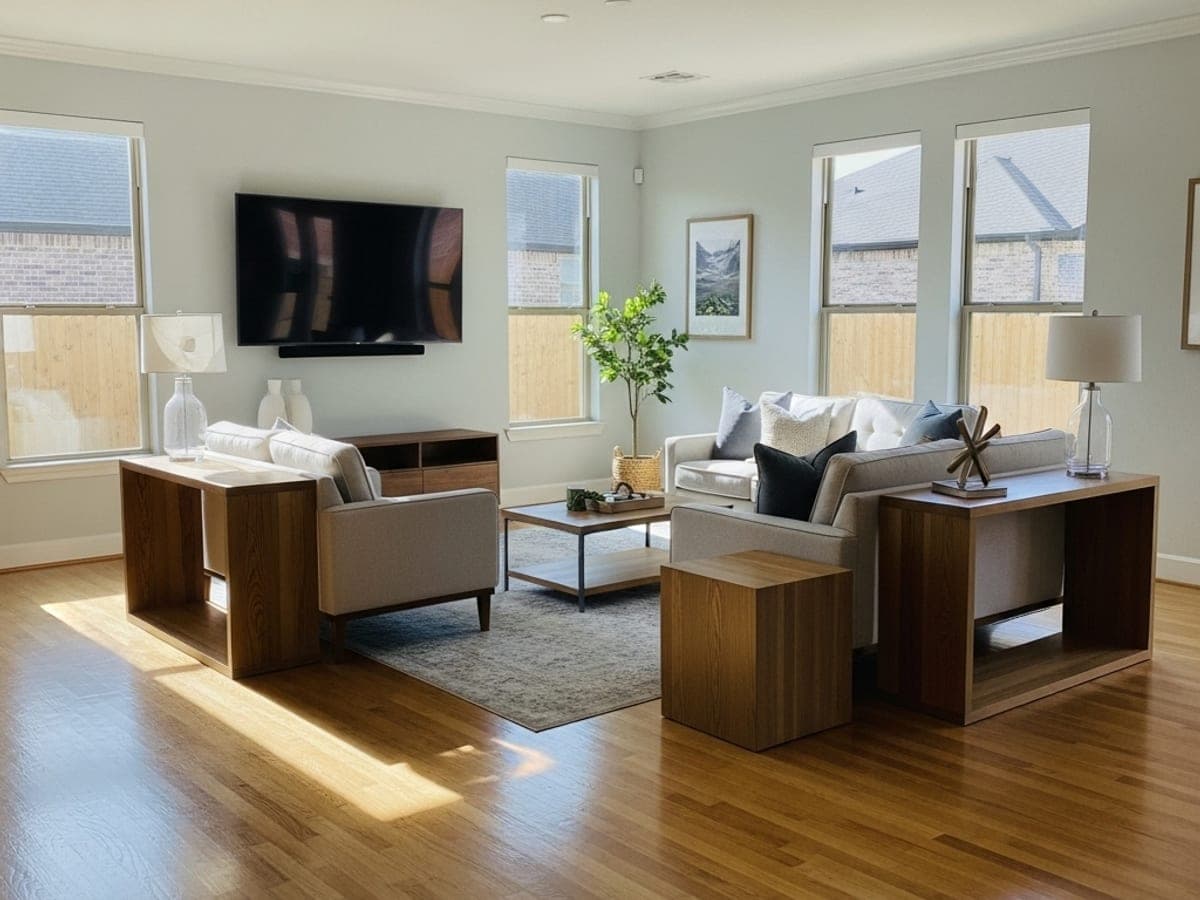
Every service company has a stock interval, and for hardwood it's twelve to eighteen months. It's a reasonable average across a lot of houses. It's also a number that ignores the two variables that actually matter, which are how much abrasive is coming through your doors and how much residue is going down on your floors.
Get those right and the interval falls out of it.
The clock isn't running on time, it's running on grit
Wood floors don't degrade sitting still. They degrade when silica particles tracked in on shoes get pressed into the finish and dragged across it. That's the wear mechanism, and it scales with foot traffic, with whether your household wears shoes indoors, and with what's immediately outside your doors.
A house on a gravel driveway with a dog and three kids in shoes is running that clock several times faster than a two-adult barefoot household on a paved street. Same floors, same finish, wildly different schedules. If you set both of them at fifteen months, one is being over-serviced and the other is falling behind.
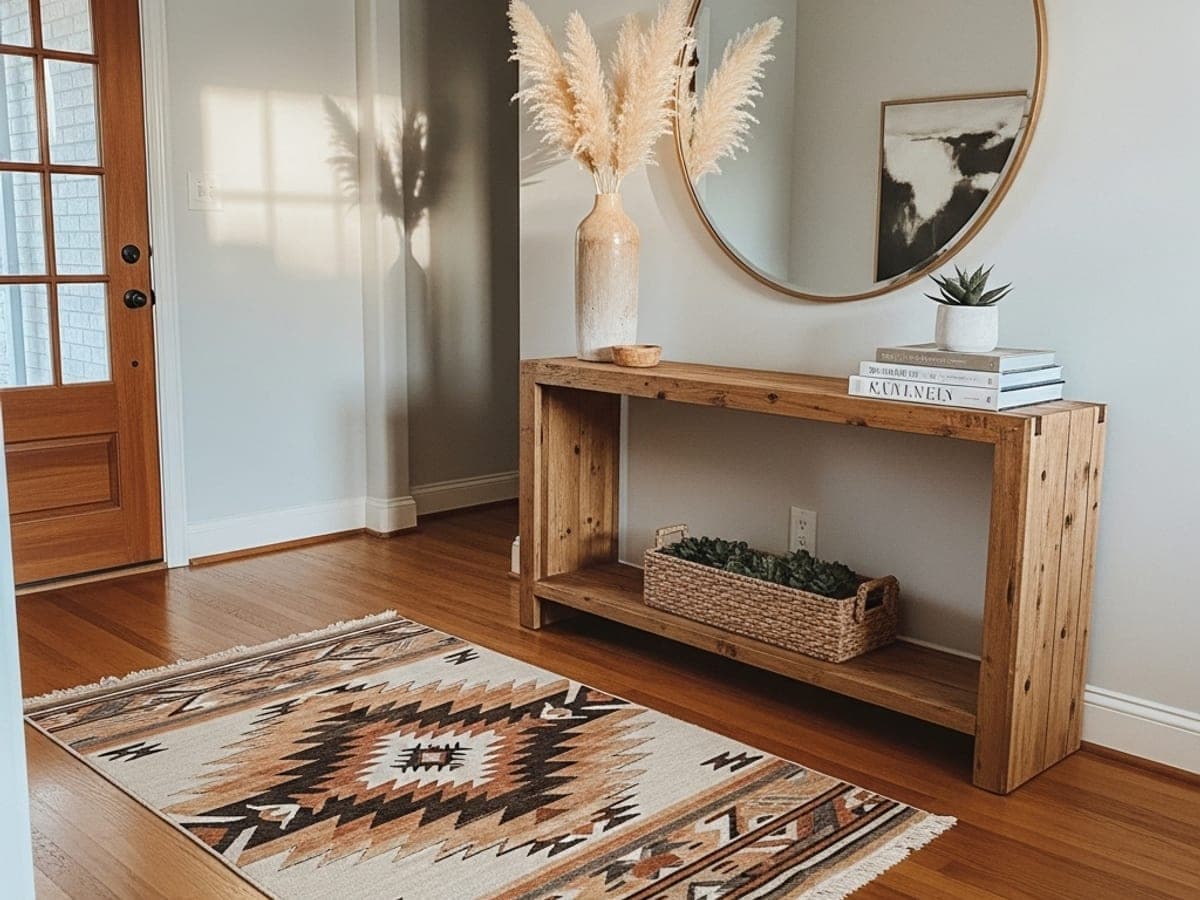
A realistic cadence by room
Whole-house intervals also hide the fact that rooms wear at very different rates. If you're planning around condition and not a calendar, here's roughly where things land.
Kitchens: annually. Cooking oil goes airborne every time something fries and settles on the largest horizontal surface in the room, which is your floor. That film hardens with age into something closer to a varnish than a spill, and the longer you leave it the less a cleaner can do with it. Kitchens are the one room where being early is meaningfully cheaper than being late.
Entryways and main hallways: annually. These take the highest concentration of abrasive in the house, because grit falls off shoes fastest in the first few steps through a door. They also show it first, which is why the hallway is usually what prompts the call.
Living and dining rooms: eighteen months to two years. Traffic is lower and more diffuse, and there's usually less product going down.
Bedrooms and formal rooms: every two to three years. Often the only reason to include them at all is so the sheen matches the rooms around them. A house where the hallway has been cleaned four times and the bedrooms never looks odd at the doorways.
How long each room can go between cleanings
Commercial spaces run four times faster
If there's wood on the floor of a shop, studio, or dining room, the residential schedule is roughly four times too slow. A busy retail floor can absorb a year of household traffic in a month, and the failure mode is worse: fall behind on a commercial floor and the finish wears through in the entry patch, which turns a cleaning problem into a refinishing problem with downtime attached.
Quarterly for restaurants, busy retail, and studios. Semi-annually for offices and lower-traffic professional spaces.
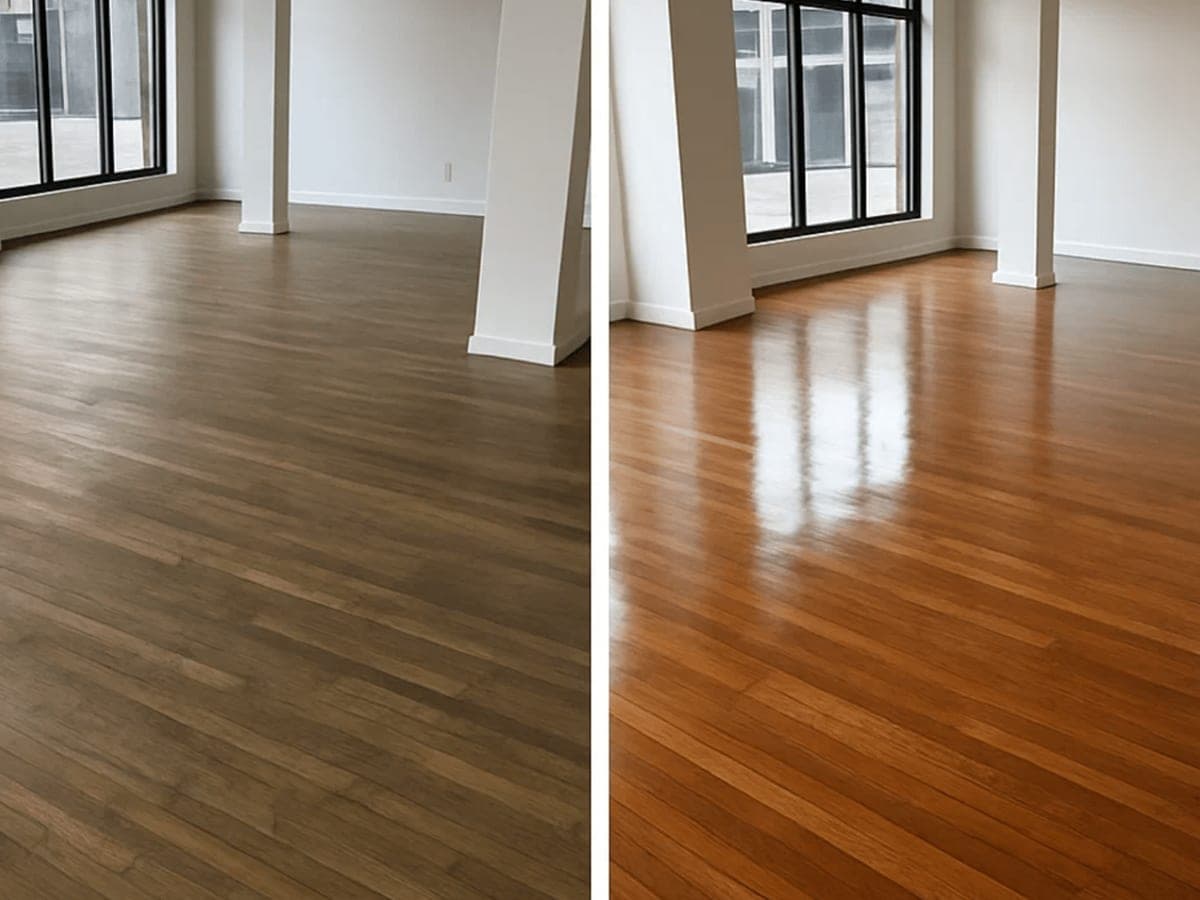
The signs you're already overdue
Instead of tracking a date, watch for these. Any one of them means the interval you're on is too long.
The floor feels different underfoot. Tacky in humid weather is residue. Slightly gritty even after sweeping means the texture of the surface has changed.
A doorway shows a visible line. If a threshold between two rooms has a clear difference in clarity or sheen, one side has accumulated something the other hasn't.
Dust settles and stays. On a clean finish, house dust sits loose and sweeps up. On a residue-loaded floor it sticks where it lands, which is why some floors seem to get dirty within a day of cleaning.
The floor looks better wet than dry. A classic sign. Water temporarily fills in surface roughness and gives you a preview of what the floor looks like without the layer on it.
Floor type moves the number too
Solid hardwood with a thick site-applied finish has the most margin. If you fall behind, you have options, including sanding it back at some point in the future.
Engineered flooring with a thin wear layer has almost none. On a 0.6mm veneer there is no sanding it back. The finish currently on that floor is the only finish it will ever have. The same is true of most strand-woven bamboo. On those floors, staying on schedule isn't about appearance, it's about not spending a finish you can't replace. We'd push those toward the annual end of the range regardless of traffic.
What you do between visits matters more than the visits
This is the honest version, from people who get paid to show up. Professional cleaning resets the floor. What determines how long that reset lasts is entirely the daily routine, and two habits do most of the work.
Put a real mat at every exterior door, coarse enough to actually scrape a sole and long enough for two or three steps. And sweep or vacuum before you ever damp-mop, every single time, because damp-mopping over loose grit is wet sanding.
Do those two things and a household on an eighteen-month interval can often stretch to two years. Skip them and no service interval will keep up.