Hardwood Floor Cleaning in Earlewood, SC
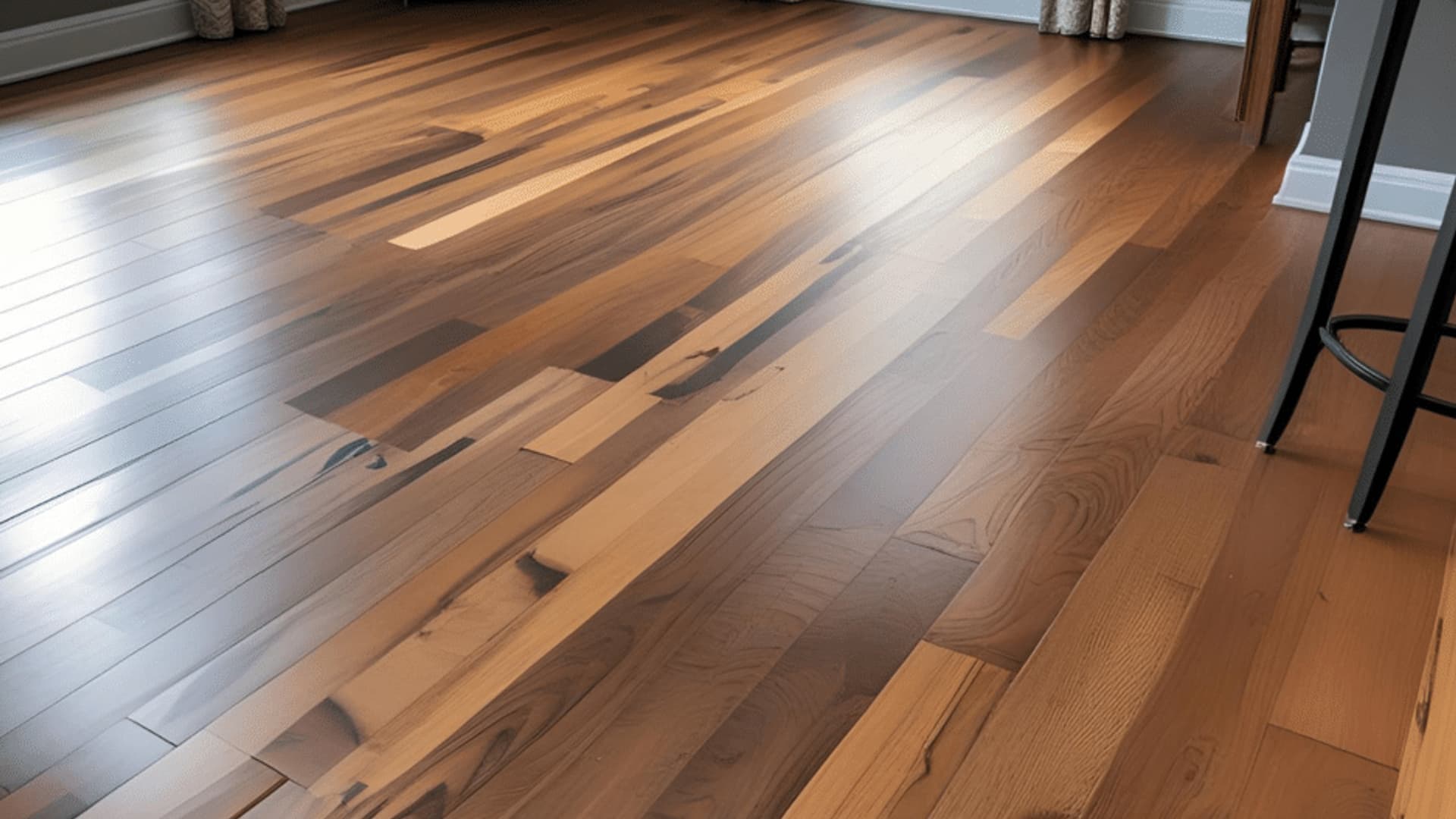
Look at the edge of your living room floor. If there is a darker band running parallel to the wall, you have an inlaid border, and it is the part of the floor most likely to be mistreated.
The bungalows around Earlewood, Melrose Heights, and Cottontown went up between roughly 1915 and 1935, and a good number of them were built with a decorative border: a strip of contrasting wood, often walnut or a darker-stained oak, running around the perimeter of the main rooms with the field boards laid inside it.
It was standard for the period and it is one of the nicest things about these houses. It is also the first part of the floor to be damaged, and almost nobody realizes it is happening.
The reason is geometry. The border sits under the furniture line, at the wall, exactly where a vacuum head hits, where a mop bucket gets set down, and where water from a window sill lands.
Why the Border Wears First
The field of a floor gets walked on, which is a soft, distributed load. The border gets struck. Vacuum bodies knock into it on every pass, chair legs pivot on it, and it takes the drips from watering a plant on a stand in the corner. On top of that, the contrasting wood is frequently walnut, which is softer than the oak beside it and shows every mark more readily because it is darker.
The Stain Question
Some borders are genuinely a different species. Others are the same oak with a dark stain worked into it. The difference matters, because a stained border has its color in a thin layer near the surface and any abrasion that reaches through it exposes pale wood. Where the border is walnut, the color goes all the way through and a scratch is far less visible. Our technician can usually tell on sight at a corner, where the miter shows the end grain.
How We Work Around It
Slower at the perimeter, less solution, and hand work at the corners where a machine cannot sit flat. Old borders often have a slight height difference from the field boards after a century of movement, and that lip is where product buildup collects and where a careless pass leaves a line. Getting a border clean and even is genuinely the fiddly part of a bungalow job and it is the part that changes how the whole room looks.
Not sure whether your floor needs cleaning or refinishing? There are three tests you can run yourself in about a minute, and they will tell you which one you are dealing with before anyone quotes you.
Hardwood problems we handle in Earlewood
Start with a call to 803-310-3848 if you want somebody to look at the border before you decide anything. $50 off your first appointment.
Areas we cover around Earlewood
Neighborhoods: Earlewood, Melrose Heights, Cottontown
Zip codes: 29208
Hardwood questions from Earlewood homeowners
Our border has gone almost black in places. Is that dirt?
Usually a mix of ground-in grit and decades of wax that has darkened, and most of it lifts. Where it stays black in a hard-edged patch, particularly near an old radiator or a window, that is often water staining in the wood and it is permanent.
Can you make the border and the field match in sheen?
We can get them close, and closer than they are now. Two different woods take a coat slightly differently and always will, which is part of why the border reads as a border.
Is it safe to run a robot vacuum on a floor like this?
It will bump the border a few thousand times a year, which is exactly the load that damages it. If you use one, set a boundary a foot off the wall and dust mop the perimeter yourself.
Are these floors thick enough to be sanded again?
Most 1920s oak has been sanded at least once and often twice. On a border in particular there is very little to spare, because the inlay strip is sometimes thinner than the field. That is the strongest argument for cleaning and coating instead, and it is why we get called to these houses at all.
Book online
Schedule your Earlewood hardwood floor cleaning
Prefer to talk it through first? Call 803-310-3848. Otherwise, pick a time below.
See the grain you paid for
Enter your zip code to reach your local Safe-Dry® team. We clean and protect hardwood across 532 locations in 6 states, with same-day appointments in most areas.